Design - Create - Grow


You’ve designed your collection, you’re ready to manufacture — and now someone tells you that you need a tech pack. But you also keep hearing that mockups are essential for marketing. So, which do you actually need? And is there a difference between a tech pack vs mockup?
Here’s the thing: this is one of the most common sources of confusion for startup clothing brands and fashion entrepreneurs. Mixing them up — or skipping one entirely — can cost you thousands of dollars in rejected samples, production delays, or a marketing launch that falls flat.
In this guide, we break down the tech pack vs mockup debate in plain language. You’ll learn exactly what each document is, when you need it, and how to use both to launch your clothing brand like a pro. Whether you’re a streetwear founder preparing for your first factory run or an apparel designer building your product line, this is the clarification you’ve been looking for.
By the end, you’ll save time, avoid costly miscommunication with manufacturers, and know precisely what to hand off — and when.
What Is a Clothing Mockup? (And Why Brands Love Them)
A clothing mockup is a digital template that lets you place your design onto a realistic photo or 3D render of a garment — without a physical sample or photoshoot. It’s a visual tool, not a manufacturing document.
Here’s how they work: you take a high-quality PSD, PNG, or PDF template of a blank t-shirt, hoodie, or other garment, and drop your artwork into a smart object layer. The result looks like a professional product photo — in seconds.
Common file formats: PSD (Photoshop), PNG (flat image), PDF (print-ready), AI (Illustrator vector)
Why clothing brands rely on mockups:
- Save $500–$2,000+ on professional product photoshoots
- Visualize colorways and design variations before committing to samples
- Create social media content, lookbooks, and Shopify product images instantly
- Share concepts with clients, collaborators, or investors for fast feedback
- Test different placements (chest print, all-over, sleeve) risk-free
Two common use cases:
E-commerce listings:
A streetwear brand launching on Shopify uses mockups to populate product pages before physical inventory arrives.
Client presentations:
A custom apparel designer uses mockups to show a corporate client three logo placement
options in a single email.
💡Pro Tip: Look for mockups with smart objects — they cut editing time by 80% compared to basic flat templates. Drop your design in, and the shadows, folds, and lighting adjust automatically.
What Is a Fashion Tech Pack? (The Document Factories Actually Need)
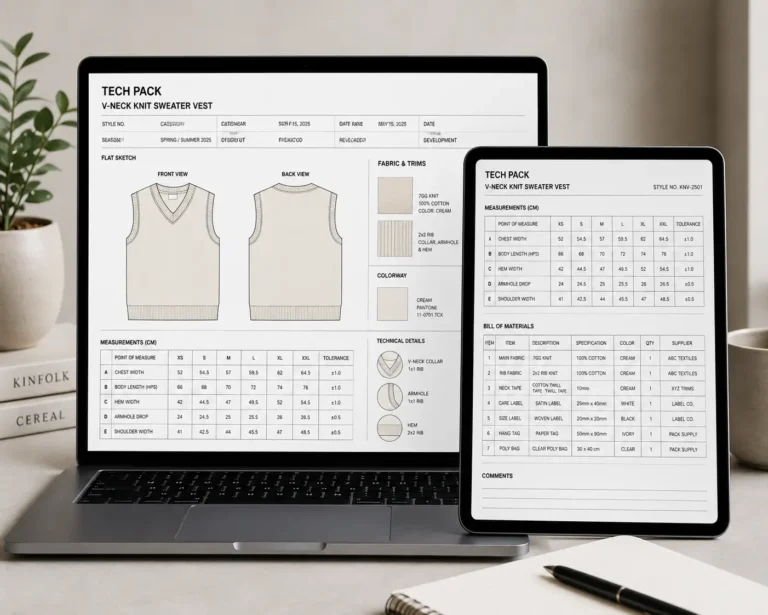
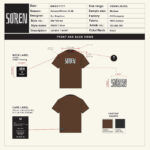
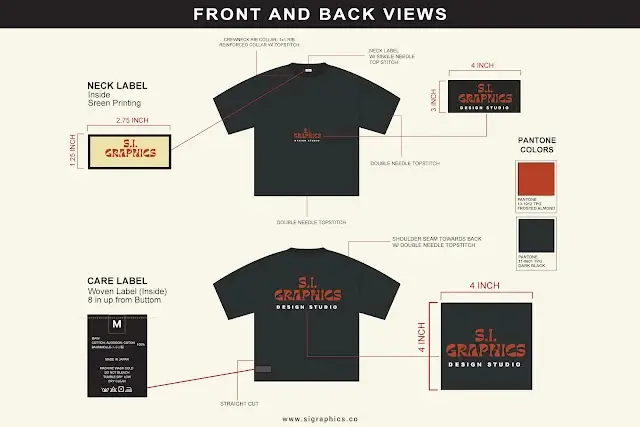
A tech pack (short for technical package) is a comprehensive specification document that tells a factory exactly how to build your garment — from fabric composition and measurements to stitching details, trim specs, and labeling requirements. It is the primary communication tool between a clothing brand and its manufacturer.
Think of it as the blueprint for your garment. Without it, manufacturers are guessing — and guessing costs money.
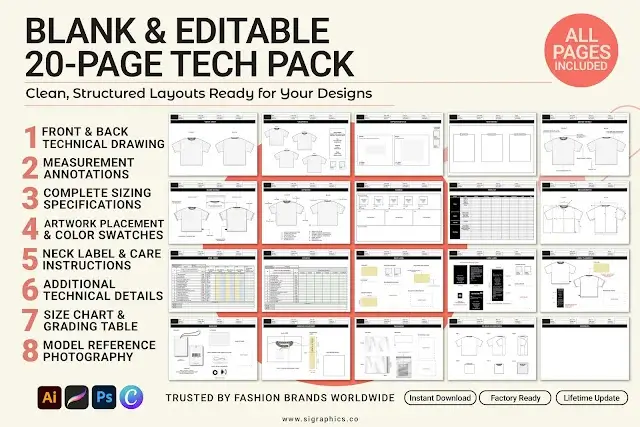
A complete tech pack for clothing manufacturing typically includes:
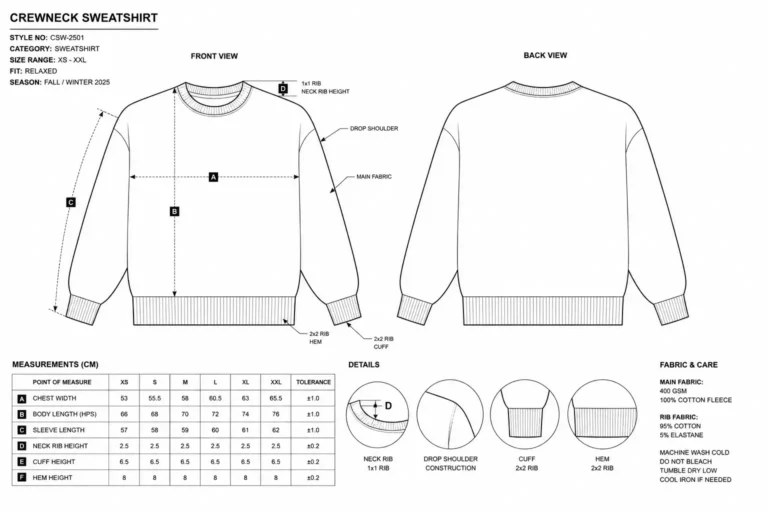
- Technical flat sketches (front, back, and detail views)
- Garment measurement specs (a size chart with graded measurements for each SKU)
- Bill of Materials (BOM) — every fabric, thread, zipper, label, and trim listed with supplier codes
- Construction details — seam allowances, stitch types (SPI), topstitch widths
- Colorways — Pantone codes or physical swatches
- Care label and branding label placement
- Fit notes and tolerance specs — acceptable variance on critical measurements
Why does this matter for your apparel product development?
Without a proper tech pack, factories will make assumptions. A half-inch deviation on a shoulder seam doesn’t sound like much — until you receive 500 units that don’t fit correctly. Factories in countries like Bangladesh, China, and Portugal work with dozens of brands simultaneously. Your tech pack is how you ensure your garment doesn’t get lost in translation.
Industry standard: Tech packs are typically created in Adobe Illustrator or prepared as a structured PDF, with measurement specs sometimes exported to Excel for factory use. Files should be high-resolution (300 DPI minimum for print) and clearly organized by SKU.
💡Pro Tip: Always version-control your tech packs. Label them v1, v2, v3 — and never send a factory an update without clearly noting what changed. A misread update is a guaranteed sampling error.
Tech Pack vs Mockup: The Full Comparison Every Brand Needs
Now that you understand what each document does, let’s put them head-to-head. This is where the confusion usually lives — because both are visual, both relate to your garment, and both feel like “design documents.” But they serve completely different parts of the apparel production workflow.
Purpose: Why They Exist
A tech pack exists for one reason: to give a manufacturer everything they need to produce your garment accurately. It is a production document, not a design document.
A mockup exists for one reason: to show what your garment will look like — to customers, clients, or your own team — before or during the production process. It is a visual and marketing tool.
They are complementary, not interchangeable. Sending a factory a mockup instead of a tech pack is like handing a contractor a Pinterest board instead of architectural drawings.
Audience: Who Actually Uses Each One
This is where many new clothing brands go wrong. They assume the same document serves all stakeholders.
Tech pack audience: Factory production managers, pattern makers, quality control teams, and sourcing agents. These are technical professionals who need precise, unambiguous specifications.
Mockup audience: Customers browsing your Shopify store, Instagram followers, wholesale buyers, and brand collaborators. These stakeholders need to understand the visual appeal — not the construction details.
A buyer at a boutique doesn’t care about your seam allowance. A factory production manager doesn’t care how stylish your mockup looks on a model.
What Happens When You Confuse the Two
Let’s look at a real scenario. A startup streetwear brand approaches a manufacturer with high-quality Photoshop mockups and says, “Build this.” The factory does their best — but without measurement specs, they use their standard pattern block. The hoodie comes back too boxy, the drawcords are the wrong weight, and the embroidery placement is off by two inches.
Result: 2–3 additional sampling rounds, a delay of 3–5 months, and several thousand dollars in wasted sampling costs.
All of this could have been avoided with a complete tech pack.
When You Need a Tech Pack
- Before sending any garment to a factory for sampling
- When working with overseas manufacturers (language barriers make precision even more critical)
- Before scaling production beyond prototype stage
- When switching manufacturers — your new factory needs specs, not assumptions
- For any garment with technical construction (structured shoulders, welt pockets, bonded seams)
When You Need a Mockup
- Building your e-commerce store before physical samples arrive
- Running a pre-order or Kickstarter campaign to validate demand
- Creating content for Instagram, TikTok, or lookbooks
- Pitching wholesale buyers at trade shows
- A/B testing colorways and design placements before committing to production
- Presenting concepts to brand collaborators or licensees
Can a Mockup Replace a Tech Pack?
No — and this is the most important takeaway in this entire guide. A mockup is a visual approximation. A tech pack is a technical specification. No manufacturer can build a garment accurately from a mockup alone.
However, mockups can support your tech pack workflow. A well-designed mockup can serve as the starting point for your flat sketches, help you finalize colorways before committing to Pantone codes, and communicate design intent visually alongside the technical document.
The smart approach: use mockups early (ideation and marketing) and tech packs for production.
Once the tech pack moves into production, the next question is how the manufacturer interprets it. See how factories read tech packs to understand what production teams actually look for in the document.
How to Get a Tech Pack and Mockups for Your Clothing Brand
Now that you know why you need both, let’s talk about how to get them — without hiring a full-time technical designer.
If you’re ready to build the production document yourself, start with our step-by-step guide on how to create a tech pack for clothing brands, including the core information factories need for sampling and production.
Option 1: Hire a Technical Designer (High Cost, High Quality)
A freelance technical designer charges $50–$150/hour. A complete tech pack for a single style typically takes 4–8 hours, putting the cost at $200–$1,200 per garment. For a 10-piece collection, that’s a significant investment.
This is the right choice for complex garments (structured outerwear, performance wear) or when you’re scaling production to 1,000+ units and precision is non-negotiable.
Option 2: Use a Tech Pack Template (Cost-Effective, Accessible)
For most startup brands and fashion entrepreneurs, a well-structured tech pack template is the smart starting point. You fill in your measurements, materials, and construction notes using a pre-built framework — no technical design background required.
S.i. Graphics offers tech pack templates built specifically for apparel product development — trusted by 2,500+ designers. Unlike generic document templates, these are structured for factory use, include pre-formatted BOM tables, measurement spec grids, and construction detail sections. Full commercial license included, lifetime access, no subscription.
Key features to look for in a tech pack template:
- Pre-formatted measurement spec tables (graded by size)
- Bill of Materials section with supplier code fields
- Construction detail callout areas
- Version control header (style number, season, revision date)
- Compatible with Adobe Illustrator or available as structured PDF
Option 3: Get Both Together — Mockups + Tech Pack Templates
The most efficient approach for a clothing brand in launch mode? Use a bundle that includes both mockup templates and tech pack documentation templates in a single package.
This way, you can create your visual marketing assets (mockups for Shopify, social, and lookbooks) and your production documents (tech packs for the factory) from the same workflow — without switching between multiple tools or subscriptions.
💡Pro Tip: Always check commercial license terms before using mockups for Etsy, Shopify, or wholesale presentations. S.i. Graphics templates include a full commercial license — use them for client work, brand sales, and product listings without restrictions.
Frequently Asked Questions: Tech Pack vs Mockup for Clothing Brands
What is the difference between a tech pack and a mockup in fashion?
A tech pack is a technical manufacturing document containing garment specs, measurements, materials, and construction details — designed for factory use. A mockup is a visual representation of your garment on a blank template or model photo — designed for marketing and concept visualization. They serve completely different purposes, and neither can replace the other in the fashion production process.
Do I need a tech pack to start manufacturing clothing?
Yes — if you want accurate samples, you need a tech pack. Without it, factories rely on assumptions that will almost always lead to fit issues, material substitutions, or construction errors. Even a basic tech pack covering key measurements, fabric specs, and construction notes is significantly better than sending a factory only a mockup or sketch.
Can I use a mockup to show a manufacturer what I want?
A mockup can supplement your communication, but it cannot replace a tech pack. You can include a mockup or rendered flat sketch as a visual reference in your tech pack — it helps the production team understand the overall look. However, mockups don’t include the measurements, tolerances, or material specifications that factories need to produce your garment.
What file format should a tech pack be in?
Most factories accept tech packs as PDF (easiest to share and lock formatting) or Adobe Illustrator (AI) files. Measurement spec sheets are sometimes shared as Excel files separately. For factory submissions, always export a PDF to prevent formatting shifts. If you’re using a tech pack template, save the working file in AI format and submit a PDF to the factory.
How much does it cost to create a tech pack for clothing?
Hiring a freelance technical designer costs $200–$1,200 per style depending on complexity. Using a tech pack template from a provider like S.i. Graphics reduces this to a one-time template cost, with your own time investment to complete the specs. For a startup brand building multiple styles, templates offer the best cost efficiency without sacrificing the structure factories need.
What is a clothing mockup used for in fashion design?
Clothing mockups are used for product photography (e-commerce listings), social media content, lookbooks, client presentations, pre-order campaigns, and design iterations. They allow brands to visualize their product on a realistic garment template without a photoshoot. High-quality PSD mockups with smart objects are the industry standard for fashion designers and clothing brand owners.
Are clothing mockups the same as fashion tech pack templates?
No. Clothing mockups are visual presentation tools (typically PSD, PNG, or PDF image files). Fashion tech pack templates are structured document frameworks used to create manufacturing specifications. Both are templates in the sense that they provide a starting structure, but they produce completely different outputs for completely different audiences.
Can a clothing brand use both a tech pack and a mockup?
Absolutely — and this is best practice. Use mockups during the ideation and marketing phases: to visualize designs, create content, and validate demand. Use tech packs during the production phase: to communicate with factories, create samples, and manage quality control. The most organized clothing brands maintain both as core assets in their apparel product development workflow.
What should be included in a tech pack for streetwear?
A streetwear tech pack should include: flat technical sketches (front, back, inside), garment measurements by size, fabric composition and weight, Bill of Materials (labels, hardware, trims, threads), construction notes (seam types, stitch count per inch), print/embroidery placement specs with exact measurements, colorways with Pantone codes, and fit notes. Streetwear often involves graphic-heavy designs, so print spec pages with precise placement guides are especially important.
Where can I download a fashion tech pack template?
S.i. Graphics offers fashion tech pack templates designed for apparel production — structured for factory use and trusted by 2,500+ designers. They come with a full commercial license, lifetime access, and no subscription. You can find them alongside mockup templates in the Complete Bundle — an efficient option for brands that need both production documents and marketing visuals in one place.
Conclusion: Use Both — And Know When to Use Each
The tech pack vs mockup debate isn’t actually a debate. They’re two different tools that every clothing brand needs — at different stages of the production process.
Here’s the quick version:
- Mockups = visual tool for marketing, ideation, and client communication
- Tech packs = production document for factories, samples, and manufacturing
- Neither replaces the other — use them together for a professional apparel production workflow
- Templates save time and money — you don’t need a full-time technical designer to get started
The brands that launch cleanly — on time, on budget, with accurate samples — are the ones that respect both sides of the process. They visualize before they build, and they document before they manufacture.
Ready to build your production kit? Here’s where to start:
Budget option: Get tech pack templates
Bundle option: Complete Streetwear Bundle — mockups + tech pack templates
Your brand deserves both a great presentation and a flawless production process. With the right tools, you can have both — from day one.