Design - Create - Grow

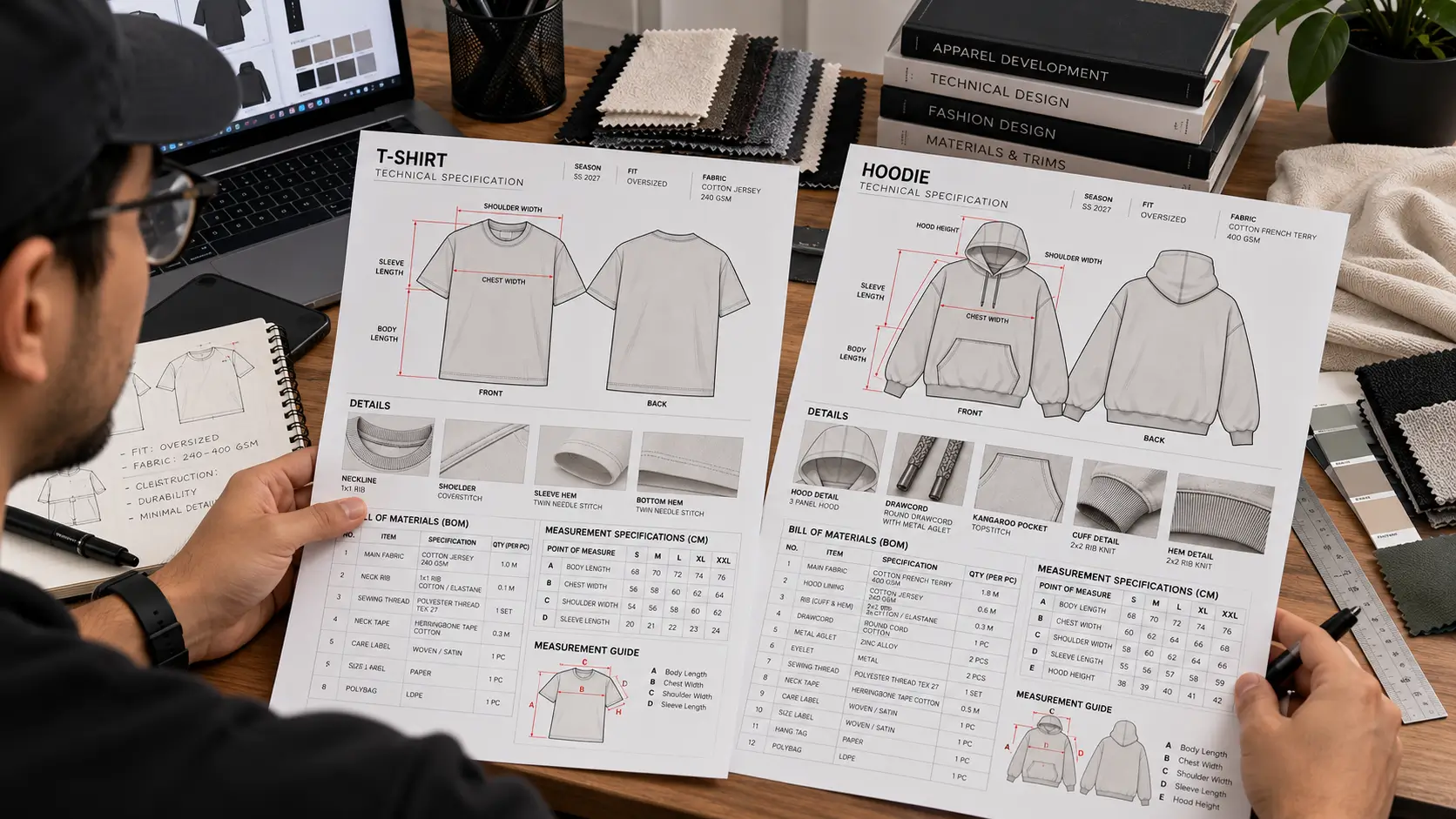

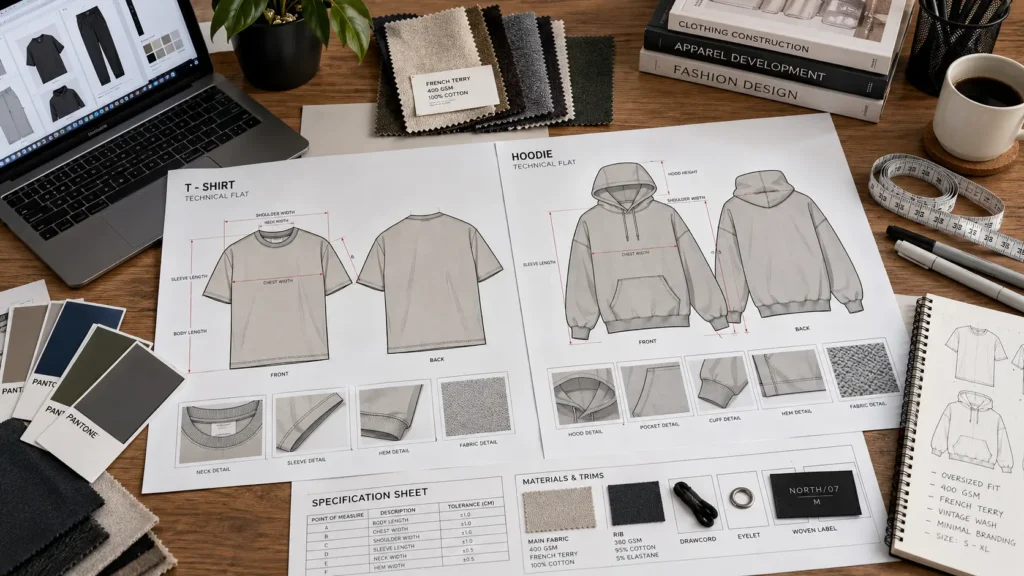
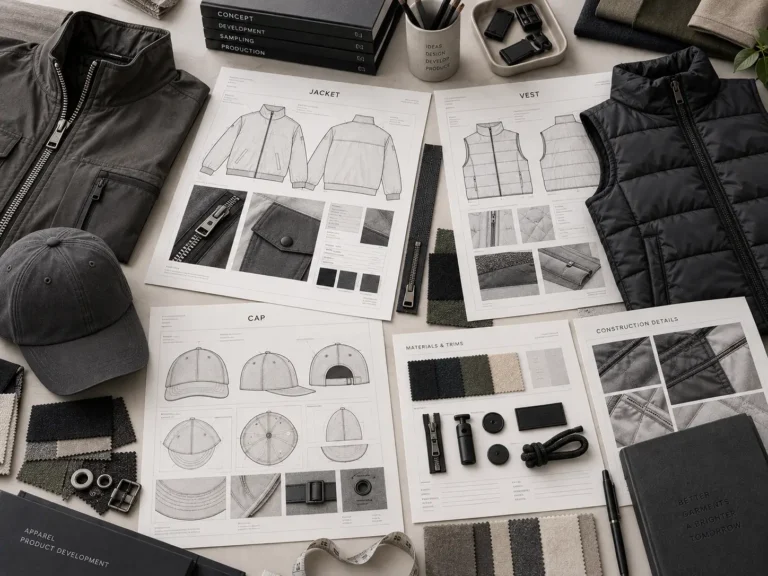
A tech pack gives a manufacturer the information needed to develop a garment consistently, but the same document cannot be copied from one style to another without revising its technical details. A T-shirt and a hoodie may share a framework—style information, technical flats, a bill of materials (BOM), measurements, colorways, artwork, and revision history—while requiring different construction notes inside it.
A tech pack hoodie needs to explain components such as the hood, pocket, rib cuffs, and drawcord hardware where present. A tech pack for a T-shirt usually gives more attention to the neckline, sleeve finish, body shape, hem, and jersey fabric.
Those differences affect more than the sketches. Fabric and GSM information, points of measure, trim entries, artwork placement, and production notes all need to reflect the garment being made. A T-shirt with a bound neckline is documented differently from one with a rib neck; a hoodie without a drawcord has different trim requirements from one with eyelets and cord ends.
The right level of detail depends on the design and the manufacturer’s workflow. The goal is not to decide that one format is better, but to show what information must change for each garment.
Quick answer: T-shirt and hoodie tech packs can share a document structure, but their construction details, materials, measurements, BOM, and artwork callouts need to match the specific garment. A T-shirt may need neckline, sleeve, hem, and fabric specifications; a hoodie may also need hood, pocket, rib, drawcord, eyelet, and hardware details where those features are present.
Table of Contents
What Actually Changes Between a T-Shirt and Hoodie Tech Pack?
The main change is the garment information inside each section. Both packs can use technical flats, construction notes, material lists, measurement tables, colorways, and revision records. A T-shirt pack describes its neckline and edge finishes; a hoodie pack adds the hood and other components the design introduces. A tech pack overview can help explain the shared framework.
| Tech pack area | T-shirt | Hoodie |
|---|---|---|
| Main silhouette | T-shirt body; regular, oversized, cropped, or another shape | Pullover or zip body, with its own fit and panel layout |
| Neckline | Crew, V-neck, rib, binding, or another finish | Hood attachment and neckline area |
| Sleeves | Short or long; set-in, raglan, or other construction | Set-in, raglan, dropped shoulder, or other construction; cuffs may be separate rib |
| Hem | Often turned, though other finishes are possible | May use a rib hem or another finish |
| Fabric | Knit type, composition, GSM, finish | Knit or fleece structure, composition, GSM, finish, and rib details where relevant |
| Pockets | Optional chest, side, or other pocket | Kangaroo, pouch, side, other pocket—or none |
| Trims | Thread, labels, print materials, style-specific items | May add rib, drawcord, eyelets, cord ends, zipper, or other hardware |
| Measurements | Body, chest, shoulder, sleeve, neck, hem as applicable | Body and sleeve points plus hood, cuff, rib, pocket, and other relevant points |
| Construction notes | Neckline, shoulder, sleeve, side seam, hem | Hood, pocket, rib, drawcord, zipper, seams, panels as applicable |
These are common considerations, not a checklist of features every garment must have. A hoodie may not have a kangaroo pocket, eyelets, drawcord, or rib hem. A T-shirt can also have complex panels, trims, or decoration. Document the style actually being developed.
T-Shirt Tech Pack: What Needs to Be Specified?
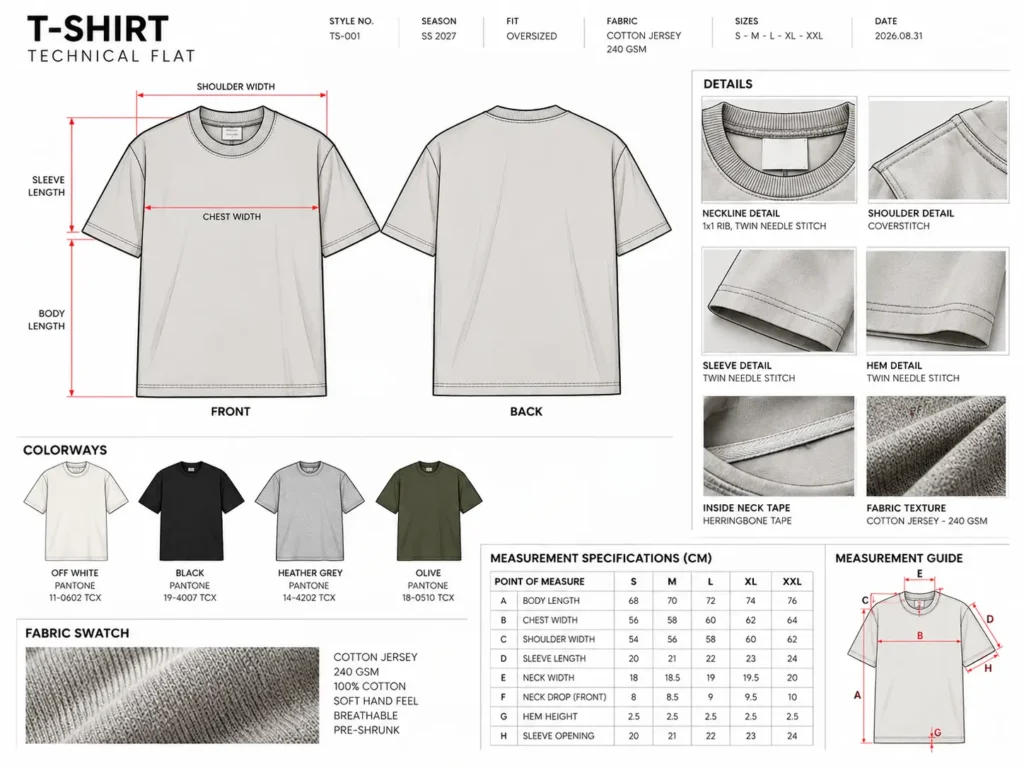
A T-shirt tech pack should make the fit, fabric, edge finishes, and decoration understandable to the factory. The T-shirt tech pack template guide is a garment-specific reference; details still need to be selected for each style.
1. T-shirt neckline
Record the neckline shape and construction. State whether a crew neck uses a separate rib, self-fabric binding, or another finish. Include neck opening measurements, rib width or binding dimensions where relevant, neck tape if used, stitch or seam finish when specified, and visible topstitching. Two crew-neck tees can look similar in a flat but feel and sit differently because of rib width, stretch, binding, or attachment. A clear callout helps the sample maker understand the intended finish.
2. T-shirt sleeves
Specify sleeve length, opening, shape, and construction. Note whether the shoulder and sleeve are set-in, raglan, or another configuration. Describe the sleeve hem, including turn-up or special finishes, and show stitching details that affect appearance. Sleeve measurements should use the same method as the measurement sheet, with points clearly identified.
3. T-shirt body and hem
Document body length, chest width, shoulder width, bottom opening, side seams, and hem details as relevant. If the design has side slits, an unusual hem depth, a cropped proportion, or an elongated body, show it in the flat and identify it in the construction notes. “Oversized,” “boxy,” “regular,” or “cropped” alone does not define the garment; the measurement table and flat should work together to communicate the intended shape.
4. T-shirt fabric and GSM
List fabric composition, knit construction, GSM, color, and finish. Add stretch or recovery requirements, shrinkage expectations, and wash treatment when they matter. GSM describes fabric mass per unit area; it does not by itself specify hand feel, drape, stretch, surface, or how fabric behaves after washing. Include relevant construction and performance information instead of treating GSM as a complete fabric description.
5. T-shirt artwork and decoration
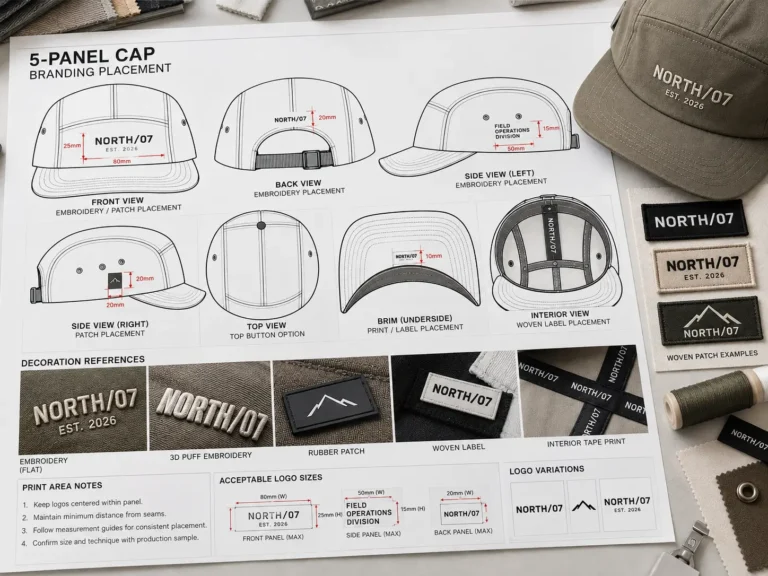
Show graphic or decoration locations—front, back, chest, sleeve—with dimensions and placement measurements from clear garment landmarks. Note embroidery or print method when known and include artwork color references. Label illustrative placements as such. The pack should show where decoration belongs; production-ready artwork may need to be supplied separately in the file format the print or embroidery vendor requests. A placement image is not automatically a production file.
Hoodie Tech Pack: What Needs to Be Added?
A hoodie can introduce more panels, trims, and attachment points than a basic T-shirt, so its documentation often needs additional callouts. The hoodie tech pack guide for factory production is a garment-specific reference. Adapt it to the style: pullover and zip hoodies, lined and unlined hoods, and different pocket or cuff choices do not share one universal specification.
1. Hood construction
Describe hood shape and details that define it: depth, width or opening, panel count and seam placement, lining if present, attachment to the body, opening finish, and topstitching. Show the hood from front and back where useful, with callouts for seams or panels that are not clear from the outline. The notes and measurements should tell the manufacturer how the hood is intended to be built; a flat sketch alone may not explain its shape or assembly.
2. Kangaroo or other pocket
If the style has a kangaroo pocket, specify width, height, opening dimensions, shape, and placement. Call out seam construction, topstitching, and reinforcement where relevant. Apply the same approach to side-entry, zip, or other pockets. If the hoodie has no pocket, do not let a generic template imply that it does.
3. Rib cuffs and rib hem
For separate rib components, provide finished dimensions and relevant material details: cuff height or width, rib height at the hem, composition or specification, color, and attachment method. Clarify sleeve opening and bottom opening measurements and how they relate to the rib. Calling a finish simply “cuff” or “hem” may not distinguish a turned fabric edge from a separate rib piece.
4. Drawcords and eyelets
Where present, specify drawcord material, diameter or other relevant specification, and length if required. Show eyelet positions and sizes, and note hardware finish or color. Include cord ends when used, with their material and finish. These may need separate BOM entries as well as construction callouts showing where they attach. If a hood has no drawcord or eyelets, leave them out of the style specifications.
5. Hoodie fabric and GSM
Identify whether the body uses fleece or another knit structure, then specify composition, GSM, color, and finish. Add whether the fabric is brushed or unbrushed if applicable, plus stretch, shrinkage, or wash requirements that affect the finished garment. List rib fabric separately when it differs from the body fabric. “Cotton fleece” may not tell a supplier enough about surface, weight, or construction. There is no single GSM that defines a correct hoodie.
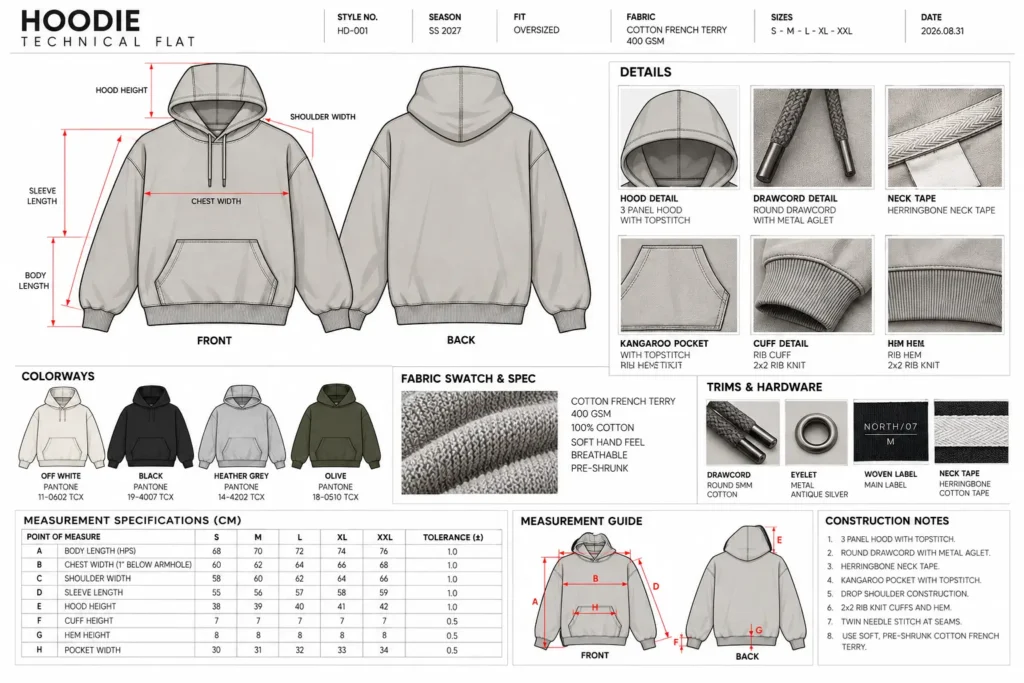
T-Shirt vs Hoodie Tech Pack: Construction Comparison
Construction callouts should explain how each part is made, not merely label what it is.
- Neckline vs. hood: A T-shirt callout may cover neck opening, rib or binding, tape, and seam finish. A hoodie may need hood panels, opening dimensions, lining, attachment, and a drawcord system if present.
- Sleeve hem vs. rib cuff: A T-shirt sleeve may have a turned hem or another edge finish. A hoodie may use separate rib, which needs dimensions and material details.
- Bottom hem vs. rib hem: Show T-shirt hem depth and stitch finish as needed. If a hoodie uses a rib hem, document its height, material, color, and attachment; describe another finish if used.
- Pocket vs. kangaroo pocket: A T-shirt pocket needs shape and placement information. A hoodie pouch adds opening dimensions, pocket size, placement, seams, topstitching, and possible reinforcement.
- Fabric description: For either garment, identify composition, knit construction, GSM, finish, and relevant performance details. Heavier or more structured fabric may change drape and construction, but there is no universal weight range by category.
- Trim package: A hoodie can introduce rib, drawcords, eyelets, cord ends, zippers, and pocket components. List only the trims used by the style.
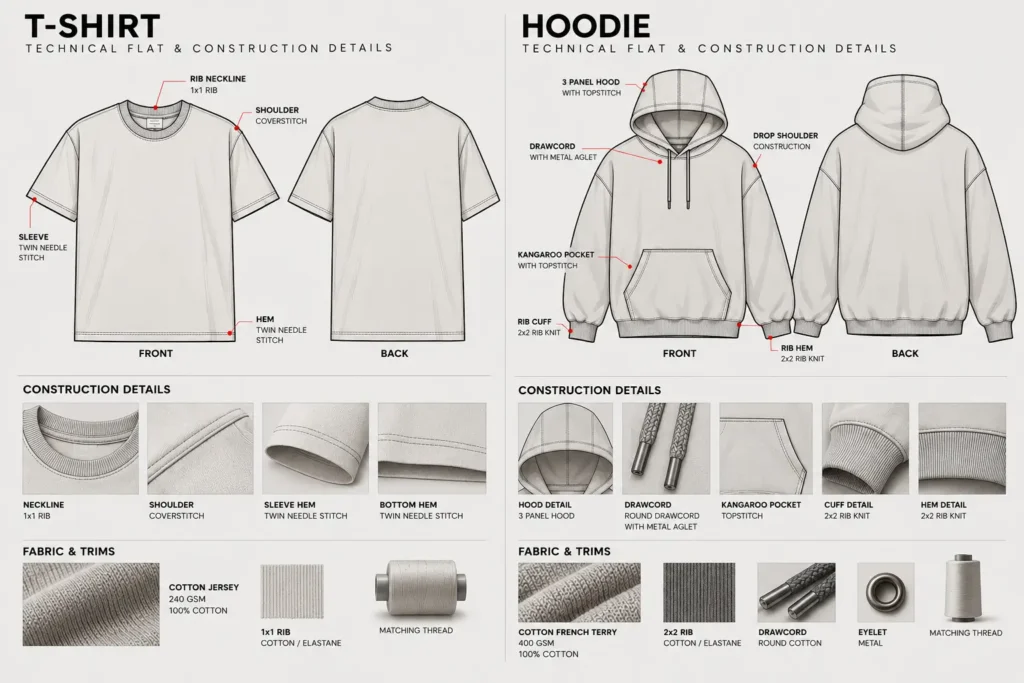
What Changes in the Bill of Materials?
The BOM can use the same columns and organization for both garments. What changes are the materials and components the style uses. See this guide to what a fashion tech pack includes for how the BOM fits into the larger document.
A T-shirt BOM may include:
- Main fabric
- Neck rib or binding, where applicable
- Sewing thread
- Labels
- Print or embroidery materials, where applicable
- Hangtag and packaging
A hoodie BOM may include:
- Main fabric and hood lining, where applicable
- Rib fabric for cuffs or hem, where applicable
- Drawcord, eyelets, and cord ends, where used
- Pocket components, if any
- Zipper and related hardware for a zip style
- Sewing thread, labels, decoration, hangtag, and packaging
For each item, include an identifying name or code, material or finish, color, and reference information when available and useful to production. Quantities, consumption, and sourcing fields depend on the development stage and factory workflow. Keep the BOM consistent with the flats and construction notes so a component does not appear in one section and disappear from another.
What Changes in the Measurement Specification Sheet?
The measurement format can carry over, but the points of measure (POMs) need to reflect the garment. Define how and where each point is measured, keep terminology consistent across table and flats, and follow the manufacturer’s method where agreed.
Possible T-shirt POMs include body length, chest width, shoulder width, sleeve length, sleeve opening, neck opening, and bottom opening.
Possible hoodie POMs include those body and sleeve points plus cuff height, rib height, hood width, hood depth, pocket width, pocket height, and pocket placement when applicable.
Do not paste a T-shirt measurement table into a hoodie pack unchanged. Add points for the hood or pocket when they affect fit or appearance, and clarify whether measurements are taken relaxed, stretched, or in another agreed condition. Exact points and methods depend on construction and manufacturer workflow.
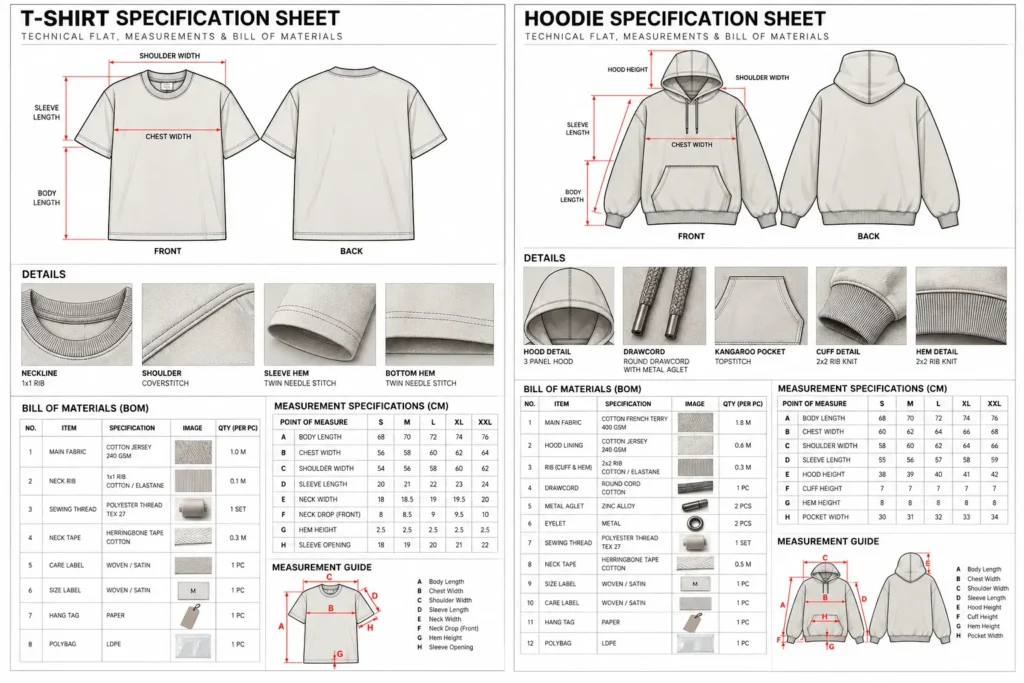
What Changes in the Technical Flat?
The purpose of a technical flat stays the same: show the garment clearly enough to communicate its shape and construction. The views and callouts must reflect the actual style. Flats should read as technical drawings, not fashion-editorial illustrations.
A T-shirt flat may show neckline, shoulders, sleeve shape, side seams, hem, and any pocket or graphic placement. A hoodie flat may additionally show hood and panels, shoulder and sleeve construction, pocket, rib cuffs, rib hem, and drawcord or eyelets where relevant. Detail views can clarify features hidden in front and back views.
Use callouts for seams, panels, stitch details, and finishes that the outline cannot convey. A graphic may be shown for placement, but artwork dimensions and production files may need separate references. For a practical guide, see how to create a tech pack for a clothing brand.
Do You Need a Separate Hoodie Tech Pack Template?
A garment-specific template can help when you repeatedly develop a category or when its components need prompts that a general layout does not provide. Hoodie sections can make room for hood measurements, pocket construction, rib materials, and trim callouts; a T-shirt format can keep neckline, sleeve, fabric, and graphic details easy to find.
A template is a starting structure, not a substitute for technical decisions. Remove irrelevant fields, add what the design needs, and update specifications for each style. One shared document system can work across categories if it makes garment-specific sections clear and avoids leaving old measurements or BOM components in place.
If you develop multiple apparel styles, the Complete Tech Pack Library offers a reusable framework for organizing your work. Customize it for each garment and confirm the final format with your manufacturer. For more on factory communication, see how to communicate with clothing manufacturers.
T-Shirt Tech Pack vs. Hoodie Tech Pack Example
Consider two fictional styles: an oversized T-shirt and a pullover hoodie. These are simplified examples of sections a designer might prepare, not prescribed page counts.
Oversized T-shirt
- Style information and front/back technical flats
- Neckline and shoulder construction
- Sleeve and hem details
- Fabric composition, knit construction, GSM, color, and finish
- Colorways and artwork placement
- BOM and measurement specification
- Grading, labels, packaging, and revision history
Pullover hoodie
- Style information and front/back technical flats, with detail views as needed
- Hood construction and attachment
- Shoulder and sleeve construction
- Kangaroo pocket details, if used
- Rib cuffs and hem, if used
- Drawcord and eyelet details, if used
- Fabric and trim specifications, colorways, artwork placement, BOM, measurements, grading, labels, packaging, and revision history
This hoodie example has more technical areas because this particular design has more components. Another hoodie may omit some or add a zipper, contrast panels, or a different pocket. A useful hoodie tech pack example should make those choices visible instead of showing only a finished garment illustration.
Common Mistakes When Adapting a T-Shirt Tech Pack Into a Hoodie
Copying a document structure can save time; copying its specifications can leave gaps or contradictions. Watch for:
- Reusing T-shirt POMs without adding relevant hood, cuff, rib, or pocket measurements.
- Showing a hood but leaving its panels, depth, opening, or attachment unclear.
- Treating a separate rib cuff like a simple turned sleeve hem.
- Omitting rib material, dimensions, color, or attachment details.
- Showing a kangaroo pocket without dimensions, opening, placement, or construction notes.
- Leaving drawcord, eyelet, and cord-end details unspecified when used.
- Carrying over a T-shirt BOM without adding or removing style-specific components.
- Forgetting to update fabric construction, GSM, finish, or relevant shrinkage information.
- Leaving hoodie-specific panels or seams out of the technical flat.
- Reusing artwork placement references that do not account for a hood, pocket, zipper, or panel seams.
- Failing to record revisions that affect construction or trim.
Before sharing a pack, compare its flats, measurements, construction notes, and BOM. They should all describe the same version of the garment.
When a T-Shirt and Hoodie Can Share the Same Tech Pack Structure
The same document system can often support both categories. Style identification, version control, flat presentation, colorways, artwork sections, BOM format, measurement-table layout, grading, labels, packaging, and revision history can follow a consistent pattern.
The contents inside those sections must still change. A shared BOM layout does not mean a hoodie uses the T-shirt’s materials. A common measurement table does not mean both garments need the same POMs. Keep the structure familiar while replacing garment-specific construction, materials, measurements, and artwork references.
How to Choose the Right Tech Pack Structure for Each Garment
Use the garment’s construction to decide which sections deserve attention:
- Basic T-shirt: neckline, sleeves, body measurements, hem, fabric/GSM, and artwork.
- Oversized or heavyweight T-shirt: silhouette, shoulder construction, fabric/GSM, neck rib, sleeve opening, hem, and wash or shrinkage considerations where applicable.
- Pullover hoodie: hood, pocket if present, rib cuffs or hem if used, drawcord and eyelets if used, fabric/GSM, and other trims.
- Zip hoodie: zipper type, length and construction, plus hood, pockets, rib components, and hardware where applicable.
- Complex hoodie: additional panels, contrast materials, special trims, decoration methods, and construction callouts.
For category-specific starting points, see the T-shirt tech pack reference or hoodie tech pack reference, then tailor each to the garment and manufacturer’s process.
Frequently Asked Questions
What is the difference between a T-shirt tech pack and a hoodie tech pack?
They can share the same broad framework, but their specifications describe different construction. A T-shirt pack focuses on details such as neckline, sleeves, body, hem, and jersey fabric. A hoodie pack may also need hood, pocket, rib, drawcord, eyelet, zipper, and trim information, depending on the style.
Does a hoodie need more tech-pack information than a T-shirt?
Often a hoodie has more components to document than a basic T-shirt, but there is no fixed rule. A simple hoodie may be less complex than a highly detailed T-shirt. Include enough information to communicate actual construction, measurements, materials, and production details.
What should be included in a T-shirt tech pack?
Include style information, technical flats, construction notes, fabric composition and GSM, relevant neckline, sleeve and hem specifications, artwork placement, BOM, measurements, colorways, grading if needed, labels, packaging, and revision information. Adapt the sections to the design.
What should be included in a hoodie tech pack?
Along with style, flat, fabric, BOM, and measurement information, document hood construction and any pocket, rib cuff, rib hem, drawcord, eyelet, zipper, or hardware details the design uses. Include artwork placement, grading, labels, packaging, and revision information as required.
What GSM should I use for a T-shirt or hoodie?
GSM is a fabric specification, not a universal requirement for a garment category. Choose fabric weight based on intended fit, hand feel, drape, use, fabric construction, and production requirements. Confirm the full fabric specification with your supplier; GSM alone does not describe every performance or finish characteristic.
Can I use the same tech pack template for T-shirts and hoodies?
You can use a shared framework if you adapt the technical flats, construction notes, measurements, BOM, and artwork references for each garment. Remove irrelevant fields and do not carry specifications across unchanged.
Do I need a hoodie tech pack template?
A hoodie-specific template may help if you develop hoodies regularly or want prompts for recurring components. It still needs customization for the style’s hood, pocket, rib, drawcord, zipper, and trim construction.
What should a hoodie tech pack example show?
A useful example should show technical flats and explain the hood, any pocket, rib components, measurements, materials, BOM, artwork placement, and revision information. It should demonstrate how the garment is specified, not just how it looks finished.
Conclusion
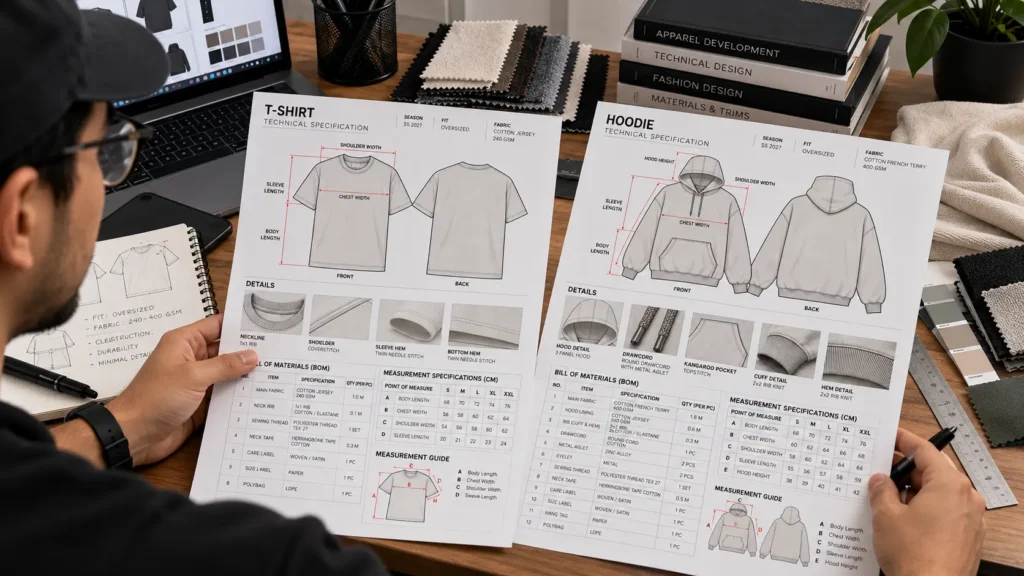
A T-shirt and hoodie can share a tech-pack framework, but the technical content needs to follow each garment’s construction. For a T-shirt, focus on neckline, sleeves, hem, fabric, and artwork placement. For a hoodie, add the hood, pocket, rib components, and any drawcord, eyelets, zipper, or hardware the design uses. Update the BOM and points of measure along with the flats so every section describes the same garment.
If you are new to apparel documentation, begin with a template and customize it section by section. If you develop multiple styles, an Adobe Illustrator Tech Pack Template can provide a consistent working structure; check that it fits your workflow and add the garment-specific specifications your manufacturer needs. The best pack is not the one with the most pages. It is the one that clearly documents the garment being developed.