Design - Create - Grow

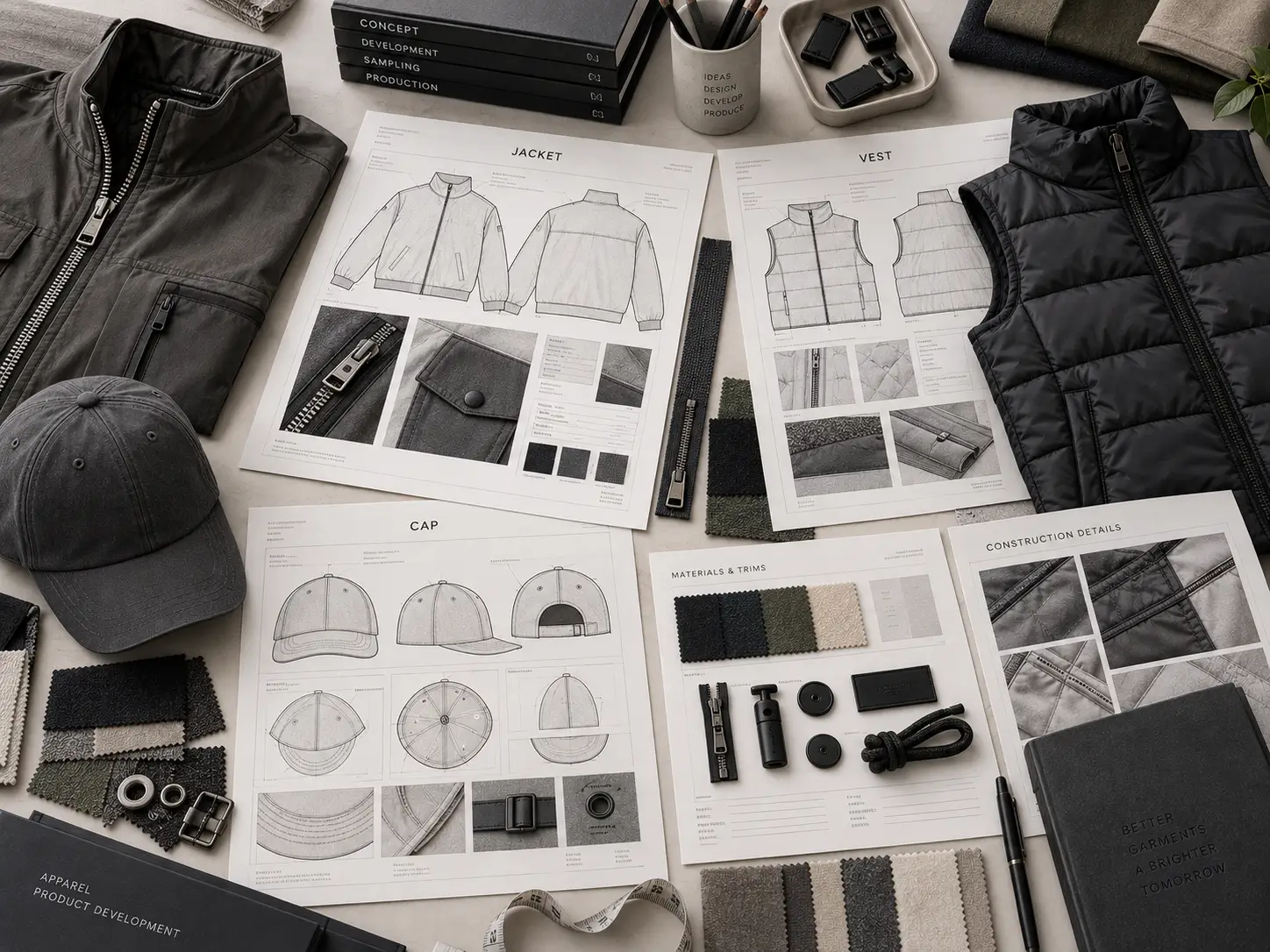

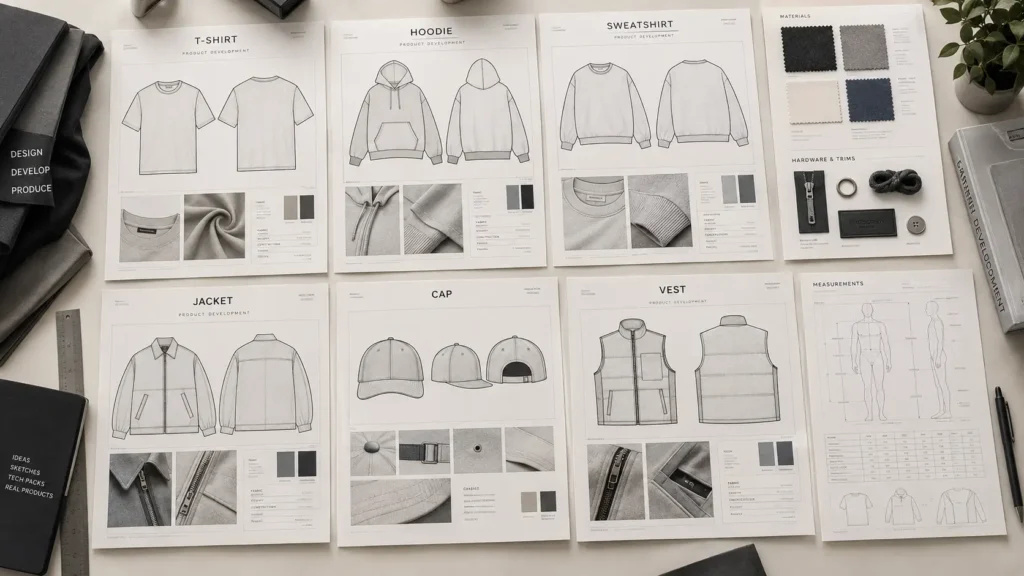
When you know you need a tech pack for clothing but are unsure where to begin, the garment itself is the best starting point. A T-shirt, hoodie, jacket, cap, and vest can all use the same core production-document framework, but their construction, measurements, materials, trims, artwork, and factory notes are not interchangeable.
This guide helps you identify the technical information that deserves the most attention for common garment categories. It is a navigation hub—not a claim that every garment requires a completely separate universal format. Your manufacturer may also request additional files, specifications, or formatting based on its workflow.
Use the category closest to your product as a starting point, then adapt the document to the actual design, fit, components, and production method.
Quick answer: The right tech pack for clothing depends on the garment you are developing, because a T-shirt, hoodie, jacket, cap, or vest can share core sections such as technical flats, materials, construction notes, measurements, and BOM information while requiring different garment-specific details. Start with the garment category that matches your product, then adapt the documentation to its construction, fit, materials, trims, artwork, and manufacturer requirements.
Table of Contents
Do You Need a Different Tech Pack for Every Garment?
Not necessarily. Most apparel tech packs use a consistent foundation: technical flats, material details, construction notes, a bill of materials (BOM), measurement specifications, labels, packaging notes, and revision history.
What changes is the depth and content of those pages. A basic tee may need detailed neckline, sleeve, fabric, and print-placement notes. A jacket may need several pages for pockets, zippers, lining, seam construction, reinforcement, and hardware. Complex construction does not create a different kind of document; it creates a need for more garment-specific documentation.
| Same core sections | Garment-specific details |
|---|---|
| Technical flats | Construction and seam details |
| Materials and BOM | Fit and points of measure |
| Measurement specifications | Trims, closures, and hardware |
| Labels and packaging | Artwork and embellishment placement |
| Revision history | Special production instructions |
Clear documentation can make communication easier, but it does not replace pattern development, sampling, fitting, testing, approvals, or ongoing manufacturer communication.
Read More: What Is a Tech Pack
Start With Your Garment Category
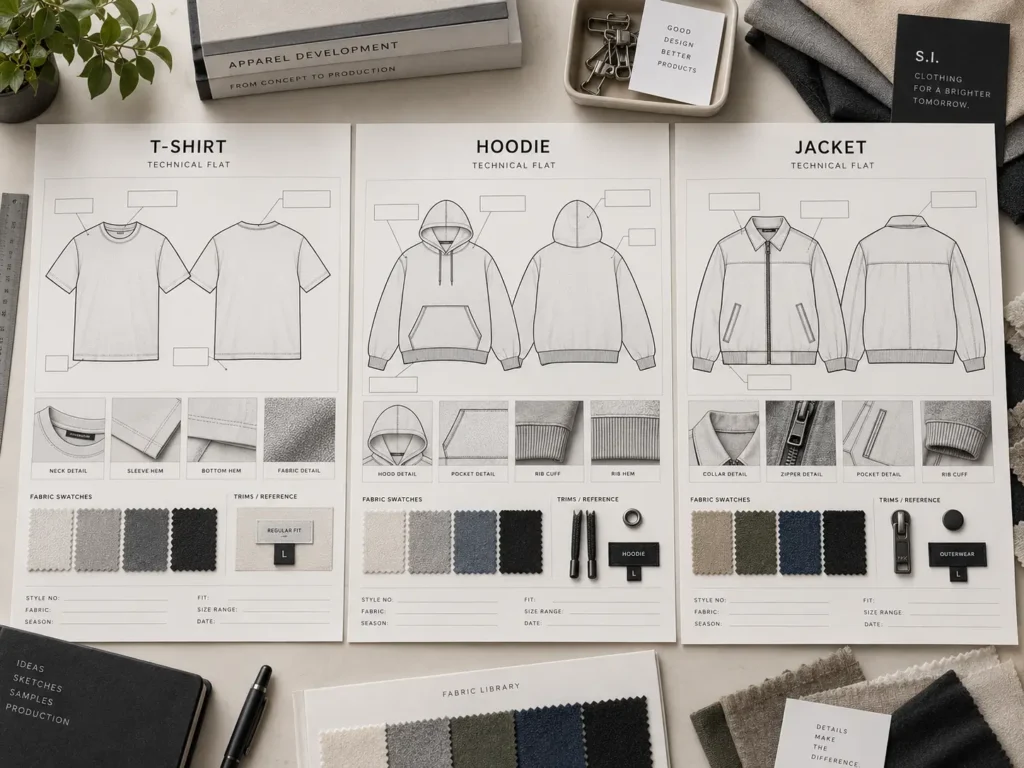
Choose a structure based on the product’s primary construction, then add pages or notes for its unique features.
| Garment | Typical technical focus | Useful tech-pack emphasis | Recommended next step |
|---|---|---|---|
| T-shirt | Neck, sleeve, hem, fabric, print | Silhouette, rib or binding, artwork, measurements | T-Shirt Tech Pack Template |
| Hoodie | Hood, pocket, rib, drawcord | Hood dimensions, pocket construction, fit, trims | Hoodie Tech Pack Template for Factory Production |
| Sweatshirt / crewneck | Neck rib, cuffs, hem rib | Rib specifications, sleeves, fabric weight, fit | Sweatshirt Tech Pack Template |
| Jacket | Closures, panels, pockets, lining | Hardware, layers, seam construction, measurements | Varsity Tech Pack Template |
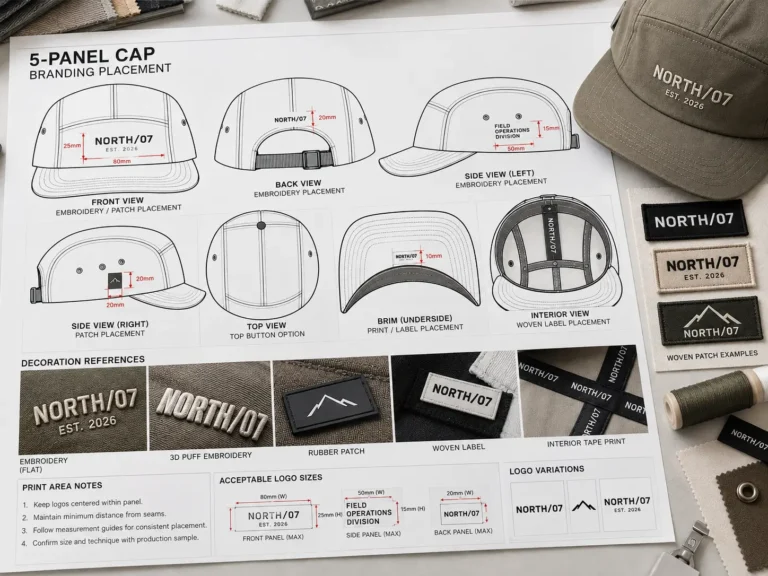
| Cap | Crown, brim, closure, embroidery | Panel layout, logo dimensions, embellishment placement | Cap Tech Pack Template |
| Vest | Armholes, closure, pockets, lining | Binding, layering, padding or insulation | Vest Tech Pack Template |
Pants, shorts, denim, polos, shirts, activewear, outerwear, and accessories also need garment-specific attention. The right starting point is the one that lets you describe the physical product accurately.
T-Shirt Tech Pack
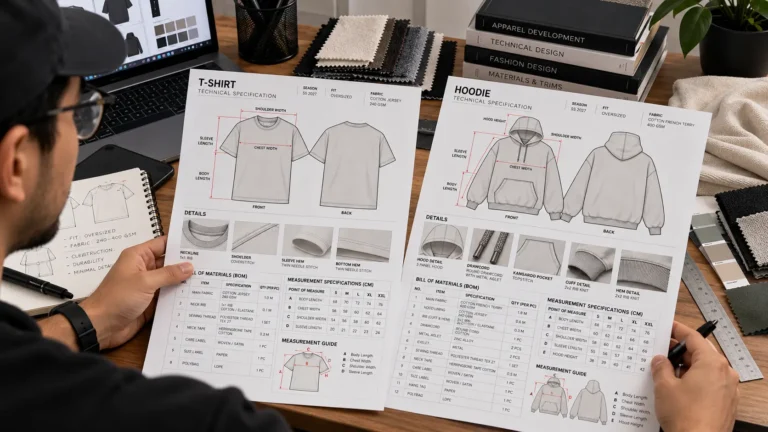
T-shirts are often less structurally complex than outerwear, but small omissions can materially affect the finished garment. Your front and back technical flats should show the intended silhouette, neckline, sleeve length, shoulder seam, hem, and any visible panels or seams.
Give particular attention to fabric composition, fabric weight where relevant, neck rib or binding, stitching, labels, packaging, and artwork placement. If the garment includes a screen print, embroidery, puff print, wash effect, or other decoration, document placement, dimensions, colors, and supporting artwork references as clearly as possible.
For oversized and streetwear T-shirts, fit is usually a central concern. Document garment length, chest width, shoulder width, sleeve opening, sleeve length, and other points of measure that define the intended silhouette. Do not assume a standard size chart communicates an oversized proportion by itself.
Read More: T-Shirt Tech Pack Template
Hoodie Tech Pack
A hoodie usually requires more construction detail than a T-shirt because it combines a body, sleeves, a hood, rib components, and often pockets and trims. Your flats should show the front and back, hood shape, pocket style, cuffs, waistband, and relevant seams.
Document hood depth and opening, drawcord type, eyelets where used, kangaroo or alternative pocket construction, cuff and hem rib, sleeve construction, fabric, and lining where applicable. Artwork notes should distinguish between placements on the body, sleeve, hood, pocket, or other panels.
Heavyweight, cropped, oversized, and other hoodie variations may need different measurements and production notes. Use a garment-specific starting structure, then adjust it to the design and the manufacturer’s requested workflow.
Sweatshirt and Crewneck Tech Pack
A sweatshirt or crewneck shares many pages with a hoodie, but removing the hood does not remove the need for detailed construction notes. The neckline becomes especially important: specify the neck rib, neck opening, seam construction, and any tape, binding, or finish required.
Also document cuff and hem rib, shoulder and sleeve construction, fabric weight where applicable, paneling, artwork placement, fit measurements, labels, and packaging. A crewneck may appear simple in a flat sketch, but its fit can depend on the relationship between the neck opening, shoulder, chest, sleeve, and rib proportions.
Jacket Tech Pack
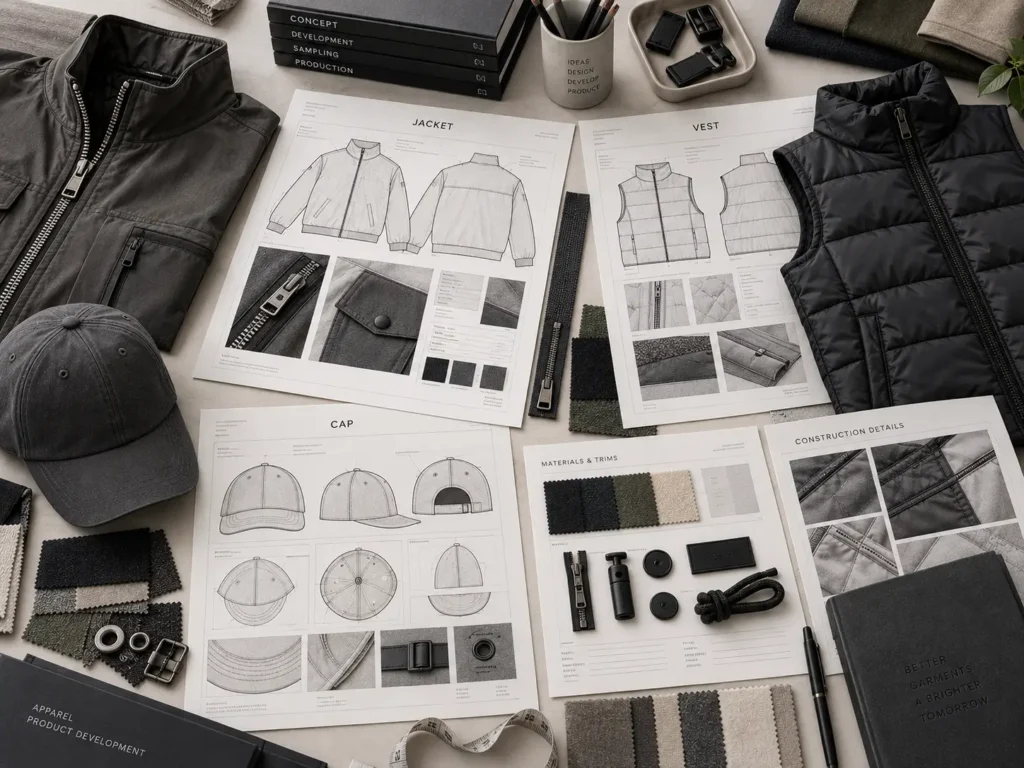
Jackets and other outerwear often need the most detailed technical communication because they can include multiple layers, closures, functional pockets, hardware, and special finishing. A jacket tech pack should reflect the actual design rather than relying on a generic checklist.
Include front and back flats plus additional views or callouts for collars, hoods, plackets, pocket construction, panels, cuffs, waistbands, zippers, buttons, snaps, and hardware. Where relevant, document lining, interlining, reinforcement, seam finishes, padding, insulation, and performance-related materials or finishes.
Measurement specifications also need careful attention. Jacket fit can be affected by layering allowance, sleeve shape, collar construction, hem adjustment, and closure placement. If waterproofing, water resistance, or another performance feature is part of the product, confirm the necessary specifications directly with the relevant supplier and manufacturer.
Vest Tech Pack
Vests can be sleeveless, but they are not simply jackets with the sleeves deleted. Armhole shape, shoulder construction, closure placement, pocket placement, binding, lining, and layering function often need extra attention.
Your document should cover front and back flats, armholes, shoulders, collar or neckline, closures, pockets, fabric, measurements, labels, and packaging. For padded, insulated, utility, tactical-inspired, puffer, streetwear, or fashion vests, add construction pages for the components actually present, such as quilting, padding, lining, pocket systems, or adjustable hardware.
Cap Tech Pack
Headwear uses a production-oriented technical document too, but its views and construction details differ from apparel. A cap tech pack may need front, top, side, back, and underside views so the factory can understand the crown, panel arrangement, brim, closure, and embellishment locations.
Document crown construction, number and shape of panels, visor or brim, closure type, eyelets, sweatband, lining where applicable, materials, dimensions, woven labels, patches, embroidery, and logo placement. Artwork callouts should identify location and dimensions clearly, especially when a design crosses panels or follows a curved surface.
What About Pants, Shorts, Denim, and Other Bottoms?
Bottoms need their own garment-specific documentation because their fit and construction involve more than a front and back drawing. Pants, joggers, shorts, jeans, cargos, wide-leg styles, and activewear bottoms may use very different waistbands, rises, pockets, closures, and hems.
Focus on waistband construction, rise, inseam, outseam, pocket construction, fly details, zippers, buttons, elastic, drawcords, belt loops, hem finish, paneling, and relevant washing or finishing instructions. Measurement pages for bottoms commonly need detailed points of measure and grading notes, because small changes can significantly alter fit across sizes. See our garment-specific resources.
How to Choose the Right Tech Pack for Your Garment
Use this planning guide to decide which areas need the most documentation:
- Basic T-shirt: silhouette, fabric, neck, stitching, artwork, measurements.
- Hoodie: hood, rib, pocket, drawcord, fit, artwork.
- Sweatshirt: neckline, rib, fabric, fit, artwork.
- Jacket: closures, panels, pockets, lining, hardware, construction.
- Cap: panels, brim, closure, embroidery, branding.
- Vest: armholes, closures, pockets, lining or padding, measurements.
- Bottoms: waistband, rise, inseam, pockets, fly, hem, grading.
This is a planning framework, not a universal manufacturer standard. A manufacturer may need additional measurements, construction details, material references, files, or approvals before sampling.
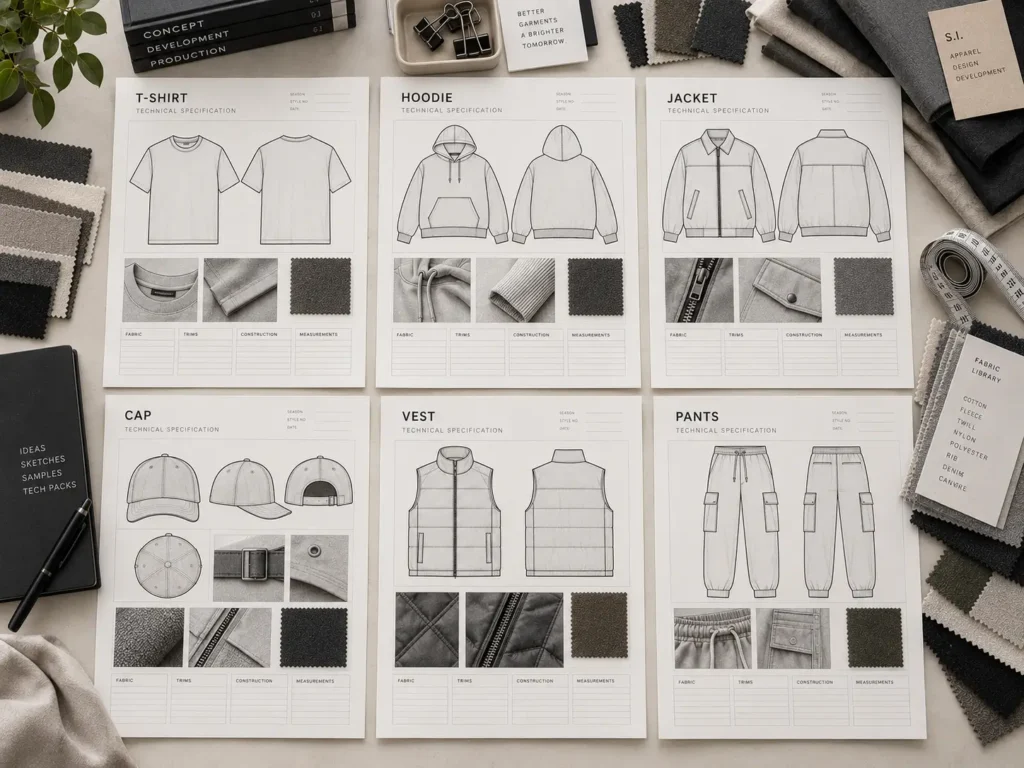
One Core Tech Pack Structure Can Support Multiple Garments
A collection can use a consistent documentation system while still accommodating very different garments. Keep style identification, page names, revision control, BOM layout, artwork references, and measurement-table conventions consistent across styles.
Then customize the construction pages and points of measure for each garment. This approach can make internal organization and manufacturer communication easier while leaving room for the factory’s own production workflow.
Read More: What Is Included in a Fashion Tech Pack
When Should You Use a Garment-Specific Tech Pack Template?
A garment-specific template can be useful when you are developing a first sample, building a repeatable workflow, managing several styles, standardizing internal documents, or documenting specialized construction. It gives you a structured starting point; it does not complete the specifications for you.
Start With an Editable Tech Pack Structure
If you create technical flats and apparel documentation in Adobe Illustrator, the Adobe Illustrator Tech Pack Template can provide a structured starting point that you can adapt to the garment you are developing.
Build a Garment-Specific Tech Pack Workflow
If you are developing multiple apparel styles, the Complete Tech Pack Library can provide a structured starting point for organizing technical documentation across a collection.
Garment-Specific Tech Pack Checklist
Core items most apparel tech packs may need
- Style name and number
- Version and date
- Technical flats
- Construction notes
- Materials
- BOM
- Measurement specifications
- Tolerances where applicable
- Size range
- Labels
- Packaging
- Artwork references where applicable
- Revision history
Garment-specific items to check
- T-shirt: neckline, sleeve, hem, artwork.
- Hoodie: hood, drawcord, kangaroo pocket, rib.
- Sweatshirt: neck rib, cuff, hem, fit.
- Jacket: closures, pockets, lining, hardware, panels.
- Cap: crown, brim, closure, embroidery.
- Vest: armholes, closures, padding or lining, pockets.
- Bottoms: waistband, rise, inseam, fly, pockets, hem.
Not every item applies to every garment. Add details only when they describe a real component, finish, measurement, or production requirement.
Common Mistakes When Using the Wrong Tech Pack Structure
The main problem is rarely choosing a “wrong template” in isolation. It is failing to adapt the document to the garment being made.
Common issues include reusing construction notes or measurements without updating them, missing garment-specific points of measure, overlooking closures or hardware, leaving special construction vague, and using artwork callouts that do not show exact placement. A generic BOM can also create confusion when it carries over components from a different style.
Keep labels, packaging, and revision history current. Do not assume that one manufacturer’s preferred format works unchanged for another, and do not treat a template as a replacement for technical review, sample evaluation, or manufacturer-specific requirements.
How This Guide Fits Into a Broader Tech Pack Workflow
Use this guide as a garment-selection step within a larger development process:
- Understand what a tech pack is.
- Identify the garment category.
- Review the garment-specific technical requirements.
- Build or adapt the tech pack.
- Confirm measurements, materials, construction, and artwork.
- Communicate with the manufacturer.
- Review samples and document revisions.
Useful supporting resources:
- What Is a Tech Pack
- How to Create a Tech Pack for a Clothing Brand
- How to Communicate With Clothing Manufacturers
Frequently Asked Questions
What is a tech pack for clothing?
A tech pack for clothing is a production-oriented document that communicates a garment’s design, materials, measurements, construction, trims, labels, artwork, and other relevant specifications.
Do different garments need different tech packs?
The core structure can remain similar, but each garment needs documentation adapted to its construction, materials, measurements, trims, and production details.
Which tech pack do I need for a T-shirt?
Start with a T-shirt-oriented structure that covers flats, neckline, sleeve and hem construction, fabric, stitching, artwork placement, measurements, labels, and packaging.
Read more T-Shirt Tech Pack Template
Do I need a different tech pack for a hoodie and sweatshirt?
They can share many core sections, but a hoodie needs additional documentation for the hood, drawcord, eyelets where used, and pocket construction. A sweatshirt or crewneck focuses more heavily on neckline, cuff, and hem-rib construction.
What should be included in a jacket tech pack?
Document the actual jacket’s closures, panels, pockets, lining, hardware, collar or hood, sleeve construction, seam details, materials, measurements, labels, and packaging.
Can the same tech pack template be used for different garments?
A base template can support multiple garment categories, provided you adapt the flats, construction pages, BOM, measurements, and artwork documentation to the product.
Do caps and accessories need tech packs?
They may need production-oriented technical documentation even though their construction differs from clothing. A cap, for example, can require clear views of its crown, brim, closure, materials, dimensions, and branding placement.
What if my garment does not fit one of these categories?
Identify its construction, materials, components, measurements, artwork, and manufacturer requirements. Then adapt the core tech-pack framework around those actual product features instead of forcing it into an unsuitable category.
Conclusion
The right tech pack for clothing is not one universal document used unchanged across a collection. It is a consistent technical framework adapted to the garment you are developing.
Start by identifying the garment category, then focus on the construction, measurements, materials, trims, hardware, and artwork that make that style distinct. Keep your style details, BOM structure, measurement tables, and revision control organized across the collection, while giving each garment the specific documentation it needs.
If you are new to apparel development, begin with the closest garment category and build from there. If you are managing several styles, use a structured workflow that makes it easier to adapt your documents as designs, samples, and factory feedback evolve.