Design - Create - Grow


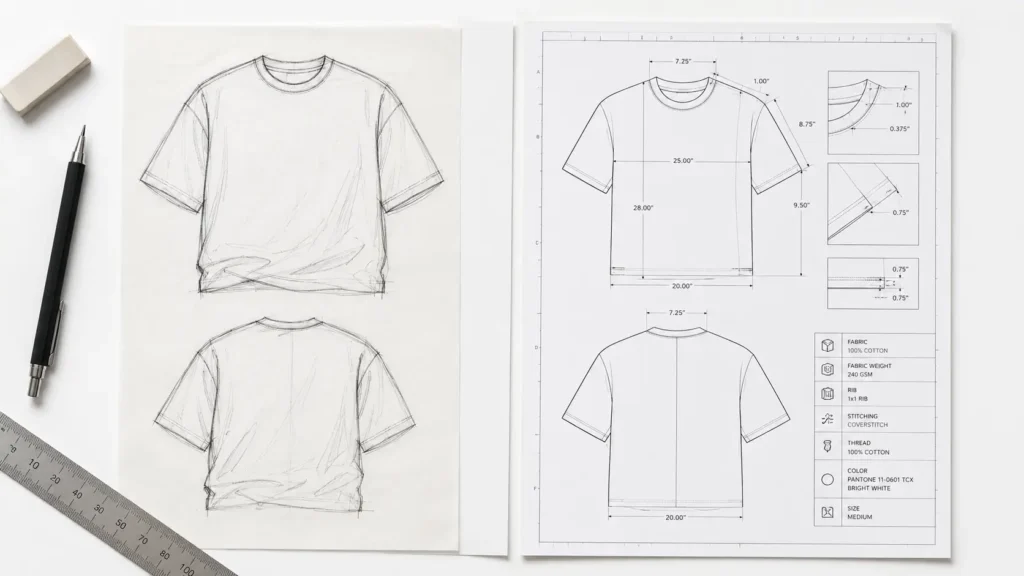
Looking for the perfect t-shirt tech pack template to send to your manufacturer? You’re not alone. T-shirts are the #1 starting garment for new clothing brands — but without the right manufacturing specs, factory errors can cost you thousands in wasted samples and missed deadlines.
Here’s the thing about overseas factories: they work from exact numbers, not guesses.
A solid t-shirt tech pack template gives your manufacturer every measurement, material callout, and construction detail they need to cut your sample right the first time.
In this complete guide, you’ll learn:
- What a t-shirt tech pack actually is (and what it’s not)
- The difference between free templates and factory-ready ones
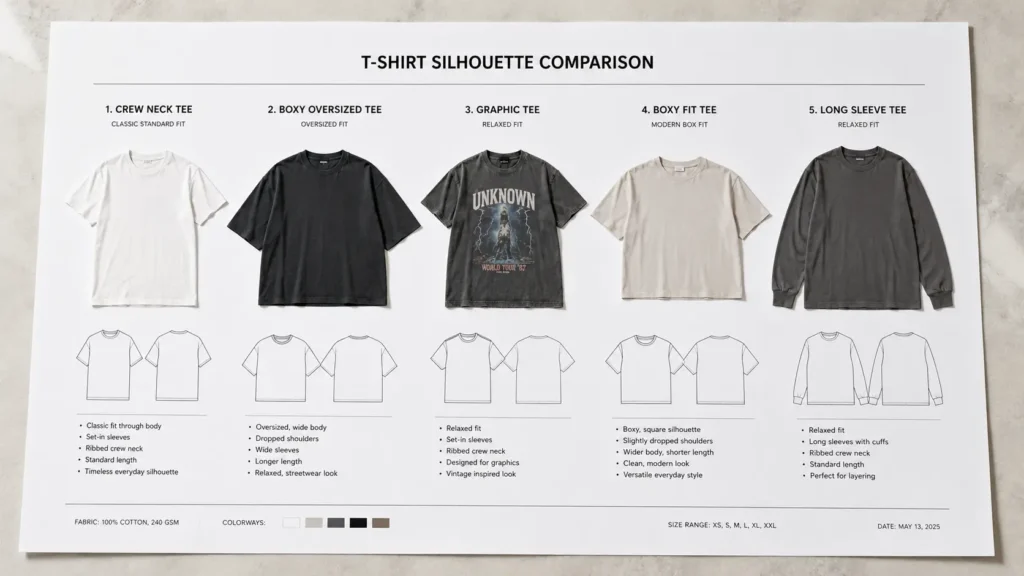
- The top 5 t-shirt tech pack templates for different brand aesthetics
- How to choose the right fit for your brand
- Answers to the most common questions from brand owners
Whether you’re dropping a vintage boxy tee or a clean everyday crew neck, this guide will give you the exact manufacturing specs you need to prevent factory errors, save time, and launch your brand with confidence.
Quick Answer: The best t-shirt tech pack template for new brand owners depends on your aesthetic, but the Crew Neck Tee and Boxy Oversized Tee are the industry standard starting points. Both include factory-ready measurements, editable Illustrator files, and POM guides that manufacturers worldwide actually use.
Table of Contents
What Is a T-Shirt Tech Pack?
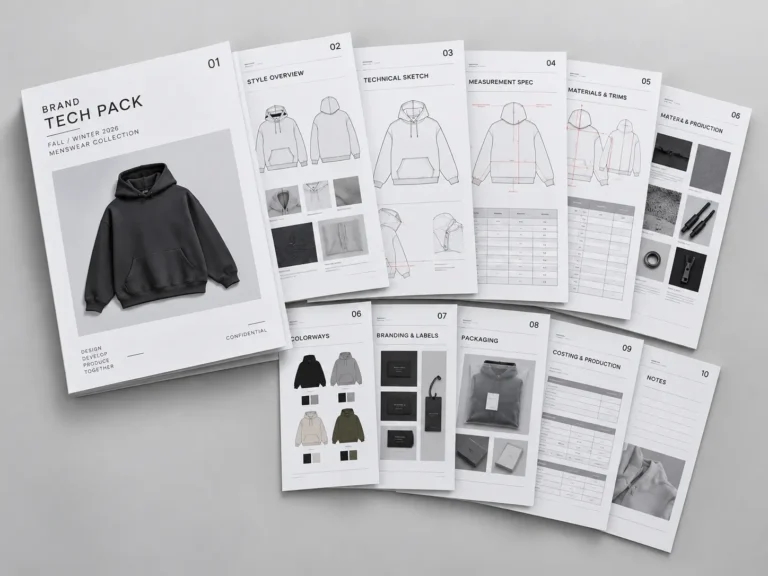
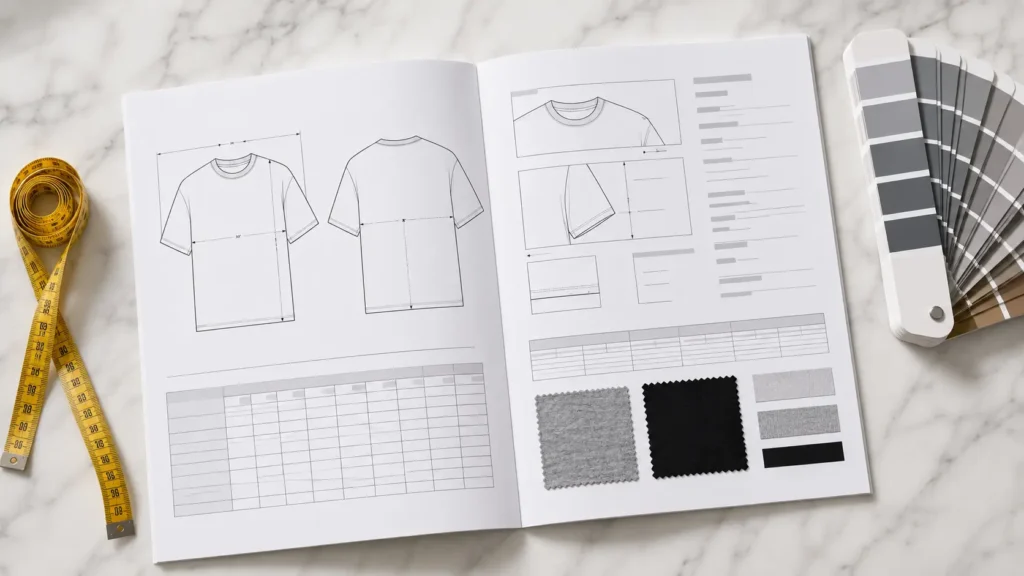
A t-shirt tech pack is a detailed technical document that communicates your garment’s exact construction specifications to a clothing factory. It includes measurements, materials, hardware callouts, seam types, and stitching details — everything a manufacturer needs to produce an accurate sample without back-and-forth guesswork.
A T-shirt tech pack follows the same basic production-document principles as other garments. If you’re new to the subject, start with our complete guide to what a tech pack is in fashion before working through the garment-specific specifications below.
Think of it as the blueprint between your design vision and factory production. Without it, manufacturers make assumptions — and those assumptions cost you money.
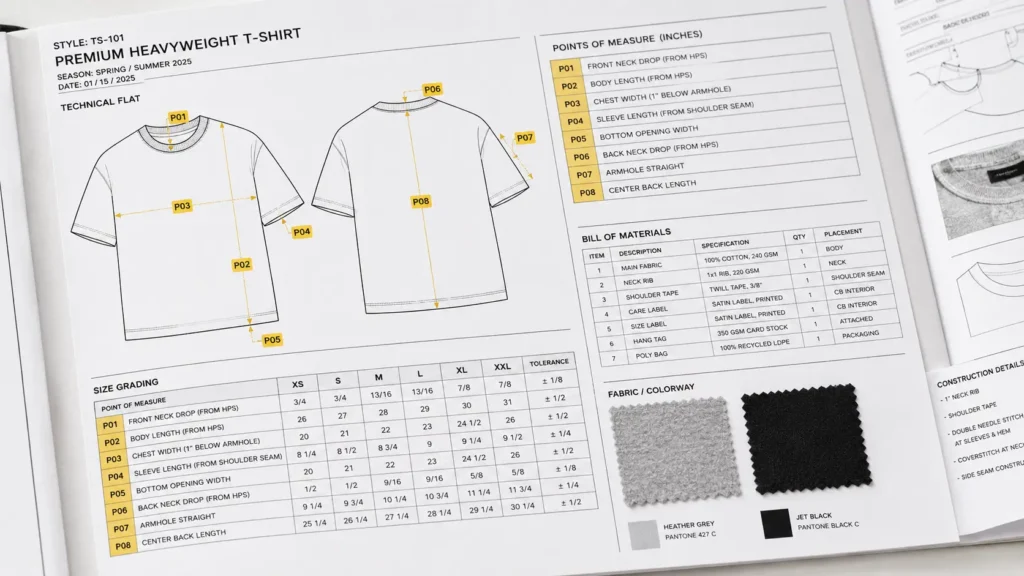
A complete t-shirt tech pack typically includes:
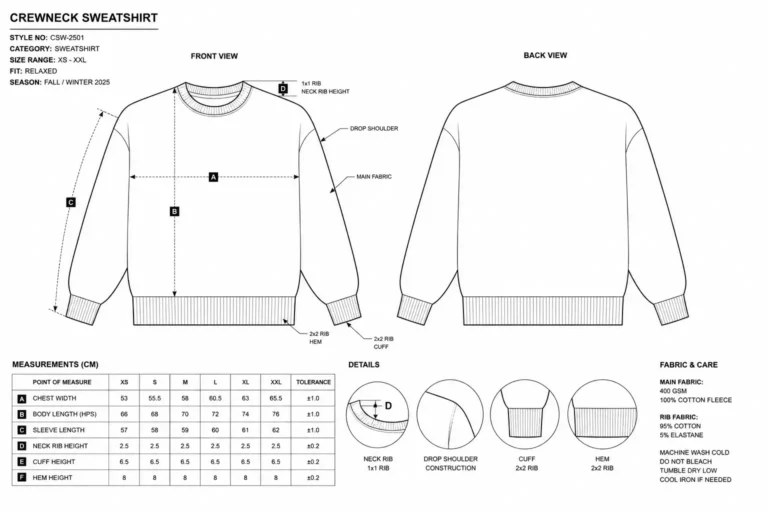
- Points of Measure (POM): Exact measurement points for chest, body length, sleeve length, and more
- Bill of Materials (BOM): Fabric type, GSM weight, thread color, label specs, and trims
- Technical flat sketches: Front and back views with callout annotations
- Construction notes: Stitch type (e.g., double-needle hem, coverstitch), seam allowances
- Grading table: Size breakdowns from XS to XXL with increment rules
For a broader page-by-page explanation of the information that belongs in a professional production document, see what is included in a fashion tech pack.
Here’s why this matters in practice:
- First sample production: Send the exact specs so your factory hits the fit on Sample 1, not Sample 4
- Scaling a streetwear collection: Maintain consistent sizing across multiple colorways and reorders
💡Pro Tip: Always double-check your Point of Measure (POM) guide before sending your t-shirt tech pack template to an overseas factory. A 2cm tolerance is standard for cut-and-sew manufacturing — but only if your callouts are clear.
Free vs Premium T-Shirt Tech Pack Templates
A quick search will surface dozens of free t-shirt manufacturing templates. And yes — some are fine for learning the format. But when you’re sending specs to an actual clothing factory, the difference between a free template and a premium one can cost you $300+ in extra sample revisions.
Here’s an honest comparison:
| Feature | Free Templates | Standard Premium | S.i. Graphics Tech Packs |
| Accurate Measurements | ✗ Generic/unverified | ✓ Industry standard | ✓ Exact factory-tested specs |
| Factory Ready | ✗ Often incomplete | ~ Partially | ✓ Manufacturers prefer this format |
| Editable AI Files | ✗ PDF only | ~ Sometimes | ✓ Fully editable Illustrator vectors |
| Grading Included | ✗ Rarely | ~ Basic only | ✓ S–XXL with increment rules |
| Support | ✗ None | ~ Limited | ✓ Included with purchase |
| Star Rating | N/A | Varies | ⭐ 5.0 from real brand owners |
Free templates are useful for understanding the format — but they’re not built for actual production. Measurements are often generic, grading rules are missing, and the file format (usually a flat PDF) can’t be edited to match your specific design.
When you’re working with boxy t-shirt manufacturing specs in particular, oversized fit requires precise dropped shoulder measurements, wider chest dimensions, and specific body length adjustments. Free templates rarely account for these modern fit variations.
Premium templates — especially those built for factory communication — give you the accuracy your manufacturer needs and the editable files that save you time on every new drop.
Top 5 T-Shirt Tech Pack Templates for Your Brand
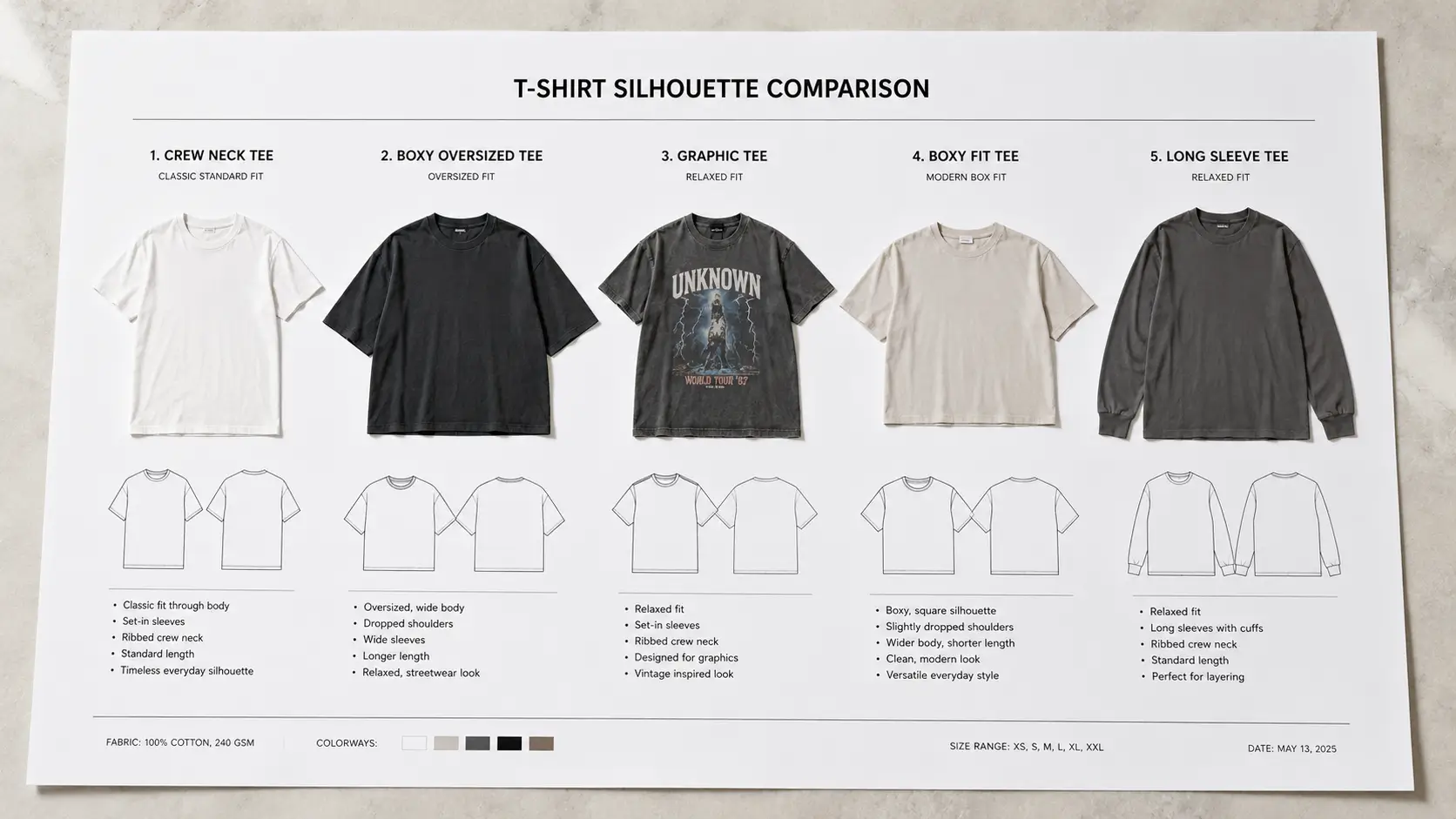
Each of these t-shirt tech pack templates was built for a specific brand aesthetic and manufacturing use case. Here’s everything you need to know about each one.
1. Crew Neck T-Shirt Tech Pack Template — Best for Everyday Essentials ⭐ Best Overall
The crew neck tee is the most universally produced garment in apparel manufacturing. It’s the #1 starting t-shirt for new brands — and for good reason. Clean lines, universal sizing, and mass-market appeal make it the safest and highest converting first drop for any label.
What’s included:
- Full POM guide with 12+ measurement callouts (chest, body length, sleeve, neck rib width, hem width)
- Editable Adobe Illustrator vector file (.AI format)
- Bill of Materials with fabric weight, thread, and label specs
- S–XXL size grading table with standard increment rules
- PDF export version for factory submission
Best for: Everyday basics brands, minimalist aesthetics, brands launching their first garment, premium essentials labels
Pros:
- ✓ Industry-standard measurements that overseas factories already recognize
- ✓ Beginner-friendly layout with clear callout annotations
- ✓ Compatible with 180–220 GSM jersey fabrics
- ✓ 5.0 star rating — used by real brand owners globally
- ✓ Lifetime access after purchase
Cons:
- ✗ Not suitable for dropped shoulder or boxy fits (see Template 2)
- ✗ Requires Adobe Illustrator for full editing capability
2. Boxy Oversized T-Shirt Tech Pack Template — Best for Streetwear Brands 🎨 Best for Streetwear
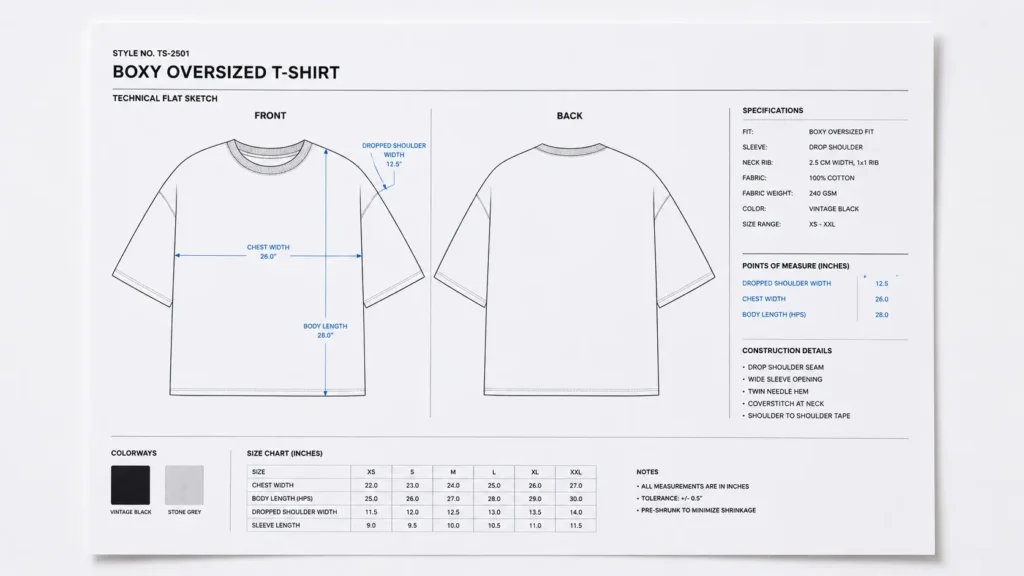
The boxy oversized tee has become the defining silhouette of modern streetwear. With dropped shoulders, a wider chest, and a shorter-than-expected body length, this fit demands precise specs — because a 2cm error on a dropped shoulder creates a completely different garment.
What’s included:
- Dropped shoulder POM callouts (shoulder point, chest width, body length, sleeve drop)
- Boxy t-shirt manufacturing specs optimized for 220–280 GSM heavyweight fabrics
- Editable Illustrator AI file with oversized-specific flat sketch
- Full BOM including ribbed neck and cuff options
- S–XXL grading with wider chest increments for the oversized silhouette
Best for: Streetwear brands, Gen-Z labels, heavyweight graphic tee drops, oversized silhouette collections
Pros:
- ✓ Built specifically for boxy fit — not a scaled-up version of a slim tee
- ✓ Includes dropped shoulder callouts that factories often struggle to interpret
- ✓ Supports heavyweight 220–280 GSM cotton fabrications
- ✓ Ideal for large back-graphic and chest-print placements
Cons:
- ✗ Not ideal for fitted or slim aesthetics
- ✗ Oversized grading requires more fabric per unit — worth factoring into costing
3. Streetwear Graphic Tee-Shirt Tech Pack Template — Best for Print-Heavy Collections
Graphic tees need more than standard measurements — they need precise print placement callouts. This template is built for brand owners dropping bold visuals, with dedicated sections for chest print coordinates, back graphic dimensions, and sleeve artwork positioning.
What’s included:
- Print placement POM callouts (chest center, back placement, distance from collar)
- Heavyweight fabric specs (240–320 GSM cotton suitable for DTG and screen print)
- Editable Illustrator flat with labeled artwork zones
- BOM section for ink type, color references (Pantone), and print method
- S–XXL grading with artwork scale adjustments by size
Best for: Graphic streetwear brands, artist-driven collections, screen print and DTG labels
Pros:
- ✓ Dedicated print placement section — critical for graphic-heavy brands
- ✓ Supports heavyweight fabrications that carry artwork better
- ✓ Artwork scaling by size prevents distortion across the size run
- ✓ Pantone color reference field included in BOM
Cons:
- ✗ Overkill for blank or minimal-print collections
- ✗ Requires understanding of print methods (DTG vs screen) for the BOM section
4. Boxy Fit T-Shirt Tech Pack Template — Best for Vintage 90s Aesthetics 💰 Best Seller
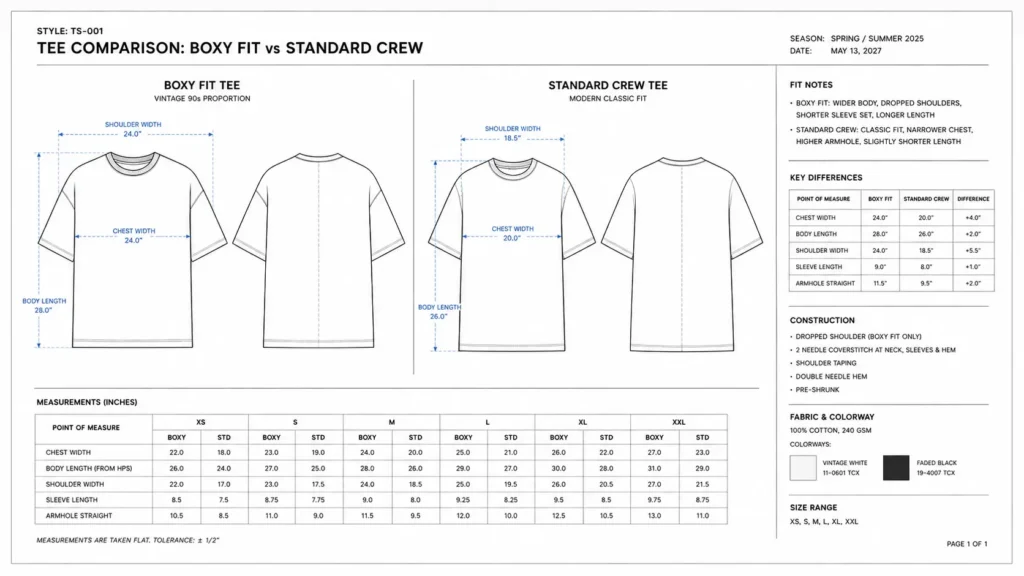
The boxy fit tee — not to be confused with the oversized version — has a shorter body, wider chest, and squarer overall silhouette. It’s the vintage 90s drape that’s dominated menswear and unisex drops for the past three seasons. Getting the proportions right requires dedicated specs.
What’s included:
- Boxy-specific POM: shorter body length, wider chest, square shoulder line
- Vintage-proportioned flat sketch with front/back callouts
- Editable AI file optimized for 200–240 GSM mid-weight fabrics
- Construction notes for side seam finishing and hem stitch type
- Size grading with vintage-proportion increments
Best for: Vintage-inspired brands, unisex collections, 90s aesthetic labels, brands targeting fashion-forward consumers
Pros:
- ✓ Captures the exact vintage boxy proportion — not just a cropped oversized tee
- ✓ Shorter body length specs prevent the most common boxy fit error
- ✓ Works across men’s, women’s, and unisex sizing structures
- ✓ High demand silhouette — proven sales performer
Cons:
- ✗ Specific to vintage-proportion aesthetic — not a versatile everyday fit
- ✗ Body length variation needs double-checking against your target market’s preferences
5. Long Sleeve T-Shirt Tech Pack Template — Best for Year-Round Collections 💼
Long sleeve tees are the highest-margin entry point for transitional season drops. They share the same basic construction as a crew neck tee but add sleeve length, cuff ribbing specs, and underarm gusset callouts that require separate documentation to get right.
What’s included:
- Full sleeve POM: total sleeve length, underarm measurement, cuff rib width
- Cuff ribbing construction callouts and BOM entry for rib fabric specs
- Editable Illustrator file with long sleeve flat sketch
- S–XXL grading with sleeve length increments by size
- BOM for fabric, thread, label, and rib knit cuff materials
Best for: Transitional season collections, year-round streetwear labels, brands building out full basics ranges
Pros:
- ✓ Sleeve cuff rib specs included — the most commonly missed detail in long sleeve manufacturing
- ✓ Sleeve length grading by size prevents the ‘all sleeves look the same length’ problem
- ✓ Compatible with 200–260 GSM fabrics for seasonal weight options
- ✓ Great companion to the Crew Neck template for a coordinated basics range
Cons:
- ✗ Doesn’t cover raglan or set-in sleeve variations
- ✗ Requires factory confirmation on cuff rib sourcing in your target country
How to Choose the Right T-Shirt Fit for Your Brand
Not every fit works for every brand. Here’s a practical decision framework to help you choose:
Consider Your Brand Aesthetic
- Clean and minimal: Crew Neck is your foundation. Universal, versatile, easy to manufacture.
- Modern streetwear: Boxy Oversized is the current standard for heavyweight graphic drops.
- Vintage-inspired: Boxy Fit captures that authentic 90s drape without going full oversized.
- Year-round essentials: Long Sleeve bridges seasonal gaps in your range.
Consider Your Target Audience
- Gen-Z streetwear consumers: Prefer oversized or boxy silhouettes in 240+ GSM.
- Premium basics buyers: Respond to clean crew neck fits in 180–200 GSM Supima or GOTS cotton.
- Vintage/thrift aesthetic fans: The boxy fit tee is exactly what they’re looking for.
Consider Your Fabric Weight (GSM)
- Lightweight (150–180 GSM): Crew neck, slim fit — best for basics and summer drops
- Mid-weight (200–220 GSM): All-round fit — works across crew neck, boxy fit, and long sleeve
- Heavyweight (240–320 GSM): Oversized and streetwear graphic tee — the current streetwear standard
Quick Decision Guide
- Choose Crew Neck if: You want a universally appealing first drop, you’re testing the market, or you’re building a basics range
- Choose Boxy Oversized if: You’re targeting Gen-Z streetwear, using 250+ GSM cotton, or planning large back graphics
- Choose Streetwear Graphic Tee if: Your brand identity centers on bold artwork and you’re using screen print or DTG
- Choose Boxy Fit if: Your brand aesthetic is vintage-inspired and you want that authentic 90s proportioned silhouette
- Choose Long Sleeve if: You’re building a year-round collection or want to extend a crew neck drop into transitional season
💡Pro Tip: If you’re launching your very first garment, start with the Crew Neck T-Shirt Tech Pack Template. It’s the most universally manufactured silhouette — which means faster sampling, fewer factory questions, and a quicker path to your first sale.
Frequently Asked Questions About T-Shirt Tech Pack Templates
Can I use free tech pack templates for factory manufacturing?
Technically yes — but the risk is high. Free templates are often built as generic documents without factory-tested measurements or proper grading tables. Inaccurate specs lead to sample revisions, and each extra sampling round costs $50–$150+ per piece. One bad sample can cost more than a premium t-shirt tech pack template ever would. For learning the format, free templates are fine. For actual production, invest in accuracy from the start.
What software do I need to edit a t-shirt tech pack?
Adobe Illustrator is the industry standard for editing tech pack templates. Vector files (.AI format) let you adjust measurements, update callouts, and add your brand details without any loss of quality. If you don’t have Illustrator, some templates also come with PDF versions that can be annotated using Adobe Acrobat or even free tools like Preview (Mac). However, vector editing is strongly recommended for accurate factory-ready output.
What is the difference between a tech pack and a clothing mockup?
A clothing mockup is a visual marketing tool — it shows what your design looks like on a ghost mannequin or flat surface for social media, e-commerce, or presentations. A tech pack is a manufacturing blueprint — it tells the factory exactly how to build the garment. Mockups have no measurements, no BOM, and no construction specs. Sending a mockup to a factory instead of a tech pack is one of the most common (and costly) mistakes new brand owners make.
What does ‘POM’ mean in a t-shirt tech pack?
POM stands for Points of Measure — the specific locations on a garment where measurements are taken. In a t-shirt, common POMs include chest width (measured 1″ below the armhole), body length (from high point shoulder), sleeve length, and hem width. POMs are critical because they dictate the entire fit of the garment. If your factory doesn’t have clear POMs, they’ll measure from inconsistent points — and your sample won’t match your vision.
Do I need to know pattern making to use a tech pack template?
No. That’s the whole point of a pre-built t-shirt tech pack template. Professional templates like those from S.i. Graphics come with pre-filled industry-standard measurements, labeled measurement points, and construction notes already in place. You fill in your brand name, update the specs to your desired measurements, and you’re ready to send. No pattern-making knowledge required — just an eye for how you want your garment to fit.
How do I share my tech pack with an overseas manufacturer?
Export your completed template as a high-resolution PDF before sending. Include all pages — flat sketch, POM sheet, BOM, and grading table — in a single file. If you’re working with a factory in a non-English speaking country, consider adding measurement callouts in metric units (centimeters). Always request a pre-production checklist back from the factory to confirm they’ve reviewed every spec before cutting the sample.
Do these templates include grading for different sizes (S–XXL)?
Yes — all S.i. Graphics t-shirt tech pack templates include a full size grading table from S to XXL. Grading rules define how measurements increase between sizes (e.g., +1 inch on chest per size, +0.5 inch on sleeve per size). This is critical for maintaining consistent fit proportions across your size run and prevents the common problem of your XL fitting like a 2XL or your S fitting too slim.
Which t-shirt style is best for starting a new clothing brand?
The Crew Neck T-Shirt Tech Pack Template is consistently the recommended starting point for new brand owners. It’s the most universally manufactured silhouette globally, which means your factory will have existing experience with the construction — reducing sampling risk. It also has the broadest market appeal, giving your brand the best chance of converting first-time buyers. Once your crew neck is proven, expanding into boxy or oversized fits becomes much lower risk.
What GSM fabric works best for a streetwear t-shirt?
For streetwear, 240–280 GSM heavyweight cotton is the current industry sweet spot. This weight gives the garment structure, makes it feel premium in hand, and holds its shape better than lighter fabrics. It also supports print methods like screen printing and DTG more effectively. Mid-weight fabrics (200–220 GSM) work well for basics and crew neck essentials, while lightweight options (150–180 GSM) suit summer-specific or athletic drops.
Conclusion: Start Manufacturing with Confidence
Nailing your manufacturing specs is the single most important step in launching a successful clothing brand. Whether you’re dropping a vintage boxy tee, a clean everyday crew neck, or a heavyweight graphic streetwear piece — starting with a professional t-shirt tech pack template is what separates brands that get their samples right from brands that burn through their budget on revisions.
Key takeaways from this guide:
- A t-shirt tech pack is a manufacturing blueprint — not a mockup or a mood board
- Free templates are fine for learning, but factory-ready accuracy requires premium specs
- The right template depends on your aesthetic, target audience, and fabric weight
- Starting with a Crew Neck tee gives new brands the highest chance of a successful first sample